
We have all been there. You start the year on fire. You hit the gym, wake up early, and crush your to-do list. Then life happens. You miss one workout. Then two. Then you tell yourself you will start again next Monday. But next Monday turns into next month. Before you know it, you are deep in a slump, staring at the ceiling and wondering where your drive went.
This is not a story about failure. This is a story on self discipline that shows you exactly how to climb back up when you have fallen off the wagon. It is not about perfection. It is about getting back up, one small step at a time.
Table of Contents
The Story on Self Discipline That Changed Everything
Let me introduce you to Alex. Alex was a lot like you. Ambitious, full of ideas, but also full of excuses. At 28, Alex had a decent job, a loving partner, and a growing pile of unfinished projects. There was a screenplay in the drawer, a half-filled journal, and a gym membership that had not been used in seven months.
Alex wanted to write a novel. He had wanted that since he was sixteen. But every time he sat down to write, his phone buzzed. Netflix called. His brain whispered, "You can do it tomorrow." And tomorrow never came.
Then one day, Alex got a reality check. His boss pulled him aside and said, "You have potential, but you are coasting. If you do not step up, we might have to let you go." That sting was the wake-up call Alex needed.
That night, Alex decided to write. He set a timer for just five minutes. Five lousy minutes. He wrote one paragraph. It was terrible. But he did it. The next day, he did seven minutes. Then ten. He kept going.
Three months later, Alex had written the first draft of his novel. He had also started running every morning. Not because he had become a superhero, but because he had learned something crucial: self-discipline is not about massive willpower. It is about small, consistent actions that build momentum.
Key Lessons from This Story on Self Discipline
Alex’s journey is not unique. It is a universal story on self discipline that teaches us five powerful truths.
1. Forgive Yourself First
The biggest enemy of self-discipline is guilt. When you slip up, you spiral into shame, and shame kills motivation. Alex learned to forgive his past slacking. He stopped calling himself lazy. Instead, he said, "I made a choice yesterday. Today I can make a better one."
Forgiveness is not permission to slack. It is permission to start again without the weight of regret.
2. Start Smaller Than You Think
Alex started with five minutes of writing. That is not impressive. But it is sustainable. Most people try to overhaul their entire life overnight. That is a recipe for burnout.
The science backs this up. James Clear, author of Atomic Habits, calls this the "two-minute rule." Make the new habit so easy you cannot say no.
3. Build Your Environment for Success
Alex rearranged his desk. He put his phone in another room. He left his running shoes by the bed. He removed friction. Your environment either supports your discipline or sabotages it.
4. Use the Power of Accountability
Alex told his best friend about his goal. He even shared his daily word count on social media. Public commitment increased his motivation. When you know someone is watching, you are less likely to quit.
5. Accept That Motivation Is a Liar
Motivation comes and goes. Discipline stays. Alex stopped waiting for inspiration. He wrote even when he felt like garbage. He learned that action creates motivation, not the other way around.
Why This Story on Self Discipline Works for Anyone
The reason this particular story on self discipline resonates is because it is not about a genius or a guru. It is about an ordinary person who struggled with the same distractions you face.
Self discipline is not a personality trait you are born with. It is a muscle. And like any muscle, it atrophies when you stop using it. But it also grows stronger when you train it consistently.
The lesson here is simple: you do not need to be perfect. You just need to be persistent. Each time you get back up, you are rewiring your brain for resilience.
Practical Strategies to Build Unbreakable Self-Discipline
Now that you have the story, let us turn it into action. Here are concrete steps you can take starting today.
Create a Non-Negotiable Morning Routine
Your morning sets the tone for the entire day. Decide on three things you will do every morning, no matter what. Keep them small: drink water, stretch for two minutes, read one page. Over time, these small wins build momentum.
Use the "Seinfeld Strategy"
Comedian Jerry Seinfeld once said the best way to write better jokes is to hang a calendar and mark an X on every day you write. Do not break the chain. Visual progress is incredibly motivating.
Embrace the Power of No
Discipline is not about doing more. It is about saying no to the things that drain your energy. Say no to late-night scrolling. Say no to commitments that do not serve your goals. Each no is a yes to your future self.
Track Your Progress, Not Your Perfection
Alex focused on showing up, not on writing a masterpiece. Track your streaks, not your performance. The goal is consistency, not quality. Quality will come with time.
Recommended Books to Deepen Your Self-Discipline Journey
If Alex’s story on self discipline inspired you, consider reading these practical guides. They offer science-backed strategies and daily exercises to help you stay on track.

The Power of Discipline by Rania H. Anderson provides a clear framework for using self-control and mental toughness to achieve your goals. With a 4.6 star rating and over 11,000 reviews, it is a go-to resource for anyone serious about building discipline.
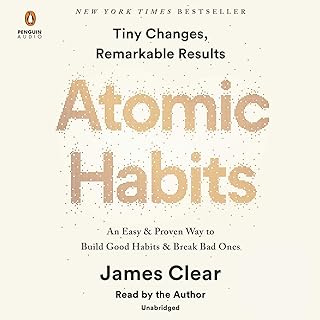
Atomic Habits by James Clear is the modern classic on habit formation. It explains how tiny changes lead to remarkable results. This audiobook is free with a trial and has a stellar 4.8 rating from nearly 150,000 reviews.

Discipline Equals Freedom by Jocko Willink is a field manual for mental toughness. It is direct, no-nonsense, and perfect for anyone who needs a kick in the pants. Priced at only $12.93, it is a steal.

The Mountain Is You by Brianna Wiest helps you understand why you self-sabotage and how to transform that into self-mastery. With a 4.7 rating and over 27,000 reviews, it is a deeply practical book.

No Excuses! by Brian Tracy is a classic that covers every area of life: health, finances, relationships. At just $8.66 and a 4.7 rating, it is one of the best values on this list.
Comparison of Top Self-Discipline Books
| Product | Price | Rating | Key Focus | Buy at Amazon |
|---|---|---|---|---|
|
$16.83 | 4.6 | Self control, mental toughness | Buy Now |
|
$0.00 (free with trial) | 4.8 | Habit formation, small changes | Buy Now |
|
$12.93 | 4.7 | Mental toughness, action | Buy Now |
|
$0.00 (free with trial) | 4.7 | Self-sabotage, self-mastery | Buy Now |
|
$8.66 | 4.7 | Comprehensive life discipline | Buy Now |
The Science Behind Getting Back Up
Neuroscience explains why Alex’s approach worked. When you repeat a behavior, your brain forms neural pathways. The more you repeat it, the stronger the pathway becomes. This is called long-term potentiation.
When you slack, those pathways weaken. But the moment you take action again, you start rebuilding them. The first days are the hardest because the pathway is overgrown with weeds. But every step forward clears the path.
This is why self-discipline is a story on self discipline that never ends. It is not a destination. It is a daily practice of choosing the harder, better option today so tomorrow is easier.
Common Obstacles and How to Overcome Them
The "All or Nothing" Trap
You miss one day and tell yourself you have ruined everything. So you quit. Instead, adopt the "never miss twice" rule. If you miss a day, make sure you do it the next day. One slip does not define you.
The "I Don't Feel Like It" Lie
Your feelings are not facts. You do not need to feel motivated to act. Alex wrote even when he hated every word. He ran even when his legs ached. Action changes your feelings, not the other way around.
The Comparison Game
You see someone else’s highlight reel and feel inadequate. That story on self discipline is yours alone. Run your own race. Alex compared himself only to yesterday’s Alex. That kept him focused and humble.
Frequently Asked Questions about Self-Discipline
What is the best way to start building self-discipline?
Start with one small habit you can do in less than two minutes. Focus on showing up every day. Consistency beats intensity.
How long does it take to develop self-discipline?
There is no magic number. Some habits stick in weeks, others in months. The key is to never stop practicing. Every day you practice, you get stronger.
Why do I keep falling back into laziness?
Laziness is often a symptom of overwhelm or lack of clarity. Break your goal into tiny steps. Remove distractions from your environment. Forgive yourself and start again.
Can self-discipline be learned or is it inborn?
It is absolutely learned. Your brain is plastic. You can rewire it through repeated action. The story on self discipline is proof that anyone can change.
What books on self-discipline do you recommend?
Start with Atomic Habits for habit building, No Excuses! for a comprehensive approach, and Discipline Equals Freedom for mental toughness. All three are available on Amazon.
Final Thoughts: Your Story Starts Now
Alex finished his novel. He did not become a bestseller overnight. But he proved to himself that he could follow through. That confidence spilled into every area of his life. He got promoted. He ran a marathon. He became the person he always wanted to be.
The story on self discipline is not about Alex. It is about you. You have the same ability to get back up. You have the same capacity for change. The only thing standing between you and your goals is the choice to start again.
So make that choice now. Write one sentence. Do one push-up. Read one page. Then do it again tomorrow. Before you know it, you will have built a life you are proud of. And that is the truest story of self discipline there is.