
You sit down on a Monday morning with big intentions. You plan to eat clean, hit the gym, write a page of that book, and finish the project your boss has been nagging you about. By Wednesday afternoon, the energy is gone. Sound familiar? You are not lazy, and you don’t lack ambition. What you lack is a self discipline chart — a simple weekly tracker that turns vague goals into visible, trackable lines.
A self discipline chart is not a complicated spreadsheet or a fancy app. It is a piece of paper, a whiteboard, or a digital document where you mark your daily wins. It makes consistency feel automatic because your brain loves seeing progress. When you see a streak of check marks, you want to keep it alive. That’s it. No life hacks, no expensive courses — just a chart that holds you accountable.
This article will show you exactly how to build a self discipline chart that works for any goal, plus share the best resources to strengthen your self-discipline for the long haul.
Table of Contents
Why a Self Discipline Chart Actually Works
Most people rely on motivation to get things done. Motivation is a firework: bright, loud, and gone in seconds. A self discipline chart is more like a steady campfire. It uses two psychological principles that make consistency almost automatic.
First, the visual streak effect. When you see a row of green check marks or X’s, your brain releases a tiny dose of dopamine. You want to keep that chain unbroken. James Clear, author of Atomic Habits, calls this “don’t break the chain.” A chart gives you a visual representation of your effort, and that alone is enough to pull you through low-motivation days.
Second, reduced decision fatigue. Instead of waking up and asking “Should I meditate today?”, you glance at your chart, see the empty box, and do it. The decision is already made. You just execute.
A self discipline chart also works because it forces you to commit to a tiny action. You are not tracking “be perfect at everything.” You are tracking one or two core habits that build momentum.
How to Design Your Own Self Discipline Chart
You can create a self discipline chart in under ten minutes. You need two things: the right format and the right triggers.
The Minimalist Weekly Template
Here is a simple framework that fits on one piece of paper:
| Day | Habit 1 (e.g., 10 min exercise) | Habit 2 (e.g., read 5 pages) | Habit 3 (e.g., no phone after 10pm) |
|---|---|---|---|
| Monday | ✅ or ❌ | ✅ or ❌ | ✅ or ❌ |
| Tuesday | |||
| Wednesday | |||
| Thursday | |||
| Friday | |||
| Saturday | |||
| Sunday |
That’s it. No points, no weights, no complex scoring. You check the box if you did the habit. You leave it empty or put an X if you didn’t. At the end of the week, you count your successes. The goal is not 100% perfection. The goal is to be better than last week.
Pro tip: Keep the chart somewhere you see it every morning. Tape it to your bathroom mirror, stick it on your fridge, or set it as your phone wallpaper.
Choosing the Right Habits to Track
Do not track ten things at once. Select one to three habits that create the biggest ripple effects. These are often called keystone habits. For example:
- Exercise (even 5 minutes) improves mood, energy, and focus.
- Reading (even 2 pages) deepens knowledge and reduces screen time.
- Meditation (even 60 seconds) lowers stress and boosts self-awareness.
Your self discipline chart should focus on consistent actions, not outcomes. Do not track “lose 10 pounds” because that depends on many variables. Track “ate vegetables at dinner” or “walked 10 minutes.” The output will follow the input.
The Psychology of Consistency: Why Small Daily Actions Win
If you want to hardwire consistency into your brain, you need to understand one simple truth: frequency matters more than intensity. Doing a little bit every day is more effective than doing a lot once a week. A self discipline chart naturally encourages frequency because it is easy to check the box for a tiny action.
Consider the aggregation of marginal gains. British cycling coach Dave Brailsford improved his team by making tiny 1% improvements in many areas. The result? Multiple Olympic gold medals. Your self discipline chart is your personal marginal gains system.
But consistency also fights a hidden enemy: the ego. Your brain will tell you “this one small thing won’t matter.” That is a lie. One small thing repeated 365 times becomes a mountain of change. The chart makes the small thing visible, and visibility breeds commitment.
For a deeper dive into rewiring your brain for consistent action, pick up The Psychology of Self-Discipline: Twenty-Four Proven Strategies to Rewire Your Brain for Consistent Action. It’s a practical guide that pairs perfectly with your tracker.
Step-by-Step Guide: Build Your Self Discipline Chart Today
Let’s walk through the exact process, from blank page to first check mark.
Step 1: Define Your “Minimum Effective Dose”
For each habit, decide the absolute smallest version that counts as a win. For example:
- Exercise: 5 push-ups
- Reading: 1 page
- Writing: 50 words
Anything bigger is a bonus, but the minimum is non-negotiable. This makes starting frictionless.
Step 2: Choose Your Medium
Three options work well:
- Paper chart: A printed grid. Satisfying to cross out. No tech distractions.
- Bullet journal: Hand-drawn tracker with artistic freedom.
- Digital app: Habitica, Streaks, or a simple spreadsheet.
I recommend starting with paper. It’s slower, more deliberate, and every check mark feels earned.
Step 3: Set Your Weekly Theme
Instead of tracking the same habits forever, change the focus every 4–6 weeks. For example:
- Week 1–4: health habits (exercise, sleep, water)
- Week 5–8: work habits (deep work, inbox zero, skill learning)
- Week 9–12: relationship habits (call a friend, active listening)
This variety keeps your self discipline chart fresh and prevents boredom.
Step 4: Review Every Sunday
Take 5 minutes on Sunday evening to look at your chart. Ask two questions:
- Which days were easiest?
- Which days were hardest?
If you missed Monday three weeks in a row, move your habit to a different time on Monday or lower the bar. Adjust the chart, not your self-worth.
Step 5: Celebrate the Streak
After 7 consecutive days of checking a box, reward yourself. A favorite coffee, 20 minutes of guilt-free scrolling, or buying that book you’ve had your eye on. The reward must be tied to the streak, not the outcome.
Common Mistakes That Sabotage Your Self Discipline Chart
Even a simple tracker can go wrong. Avoid these pitfalls:
Mistake 1: Tracking Too Many Habits
Five or more habits on one chart = overwhelm. Your brain freezes and you avoid the chart entirely. Start with two habits maximum. Add a third only after both feel automatic (usually after 30 days).
Mistake 2: Making the Bar Too High
If your exercise habit is “work out for 45 minutes,” you will skip it often. Lower the bar until it’s embarrassing. “Put on workout shoes” is a valid habit. Once you’re wearing them, you might do more.
Mistake 3: Forgiving Missed Days Too Easily
Don’t break the chain. If you miss a day, mark it clearly and work to get back on track the next day. Do not use weekends as “catch-up” days. Consistency means showing up even when it’s inconvenient.
Mistake 4: Comparing Charts with Others
Your self discipline chart is for you alone. Your neighbor might track “meditate 30 minutes” while you track “breathe deeply for 60 seconds.” Both are valid. Comparison kills momentum.
Digital vs. Paper Self Discipline Charts: Which is Better?
Both approaches have strengths. The best choice depends on your personality.
| Feature | Paper Chart | Digital Chart / App |
|---|---|---|
| Tactile satisfaction | High (check mark) | Low (tap) |
| Portability | Bulkier | On your phone |
| Distraction risk | None | High (notifications) |
| Customization | Unlimited | Limited by app |
| Streak visualization | Manual | Automatic (often with stats) |
If you are easily distracted by your phone, use paper. If you want detailed analytics and reminders, use a digital version. Many top self-discipline experts use paper. As Jocko Willink writes in Discipline Equals Freedom: Field Manual Mk1-MOD1, “Discipline equals freedom.” And part of that discipline is creating a simple system you trust.
Real-Life Example: How One Self Discipline Chart Changed a Life
Meet Tom. Tom wanted to write a book. He bought a notebook and a cheap pen. He drew a chart with seven days and one habit: “Write 100 words.”
Day 1: checked.
Day 2: checked.
Day 3: sick, wanted to quit. He wrote 40 words and still checked the box.
Day 4: checked.
Day 5–7: checked.
By week four, he was writing 300 words daily without struggle. After 90 days, he had a rough draft. After six months, he self-published his first novel. The book wasn’t a bestseller, but Tom had proven to himself that he could finish something.
The chart didn’t do the work. But it made the work visible, and that made it impossible to ignore.
Top Books on Self-Discipline to Pair with Your Chart
A tracker gives you the structure. Books give you the philosophy and science to stick with it. Here are the most recommended titles on self-discipline.

The Power of Discipline by Daniel Walter – A practical manual for building mental toughness.

Atomic Habits by James Clear – The modern classic on habit formation.

The Mountain Is You by Brianna Wiest – On understanding and transforming self-sabotage.

Discipline Equals Freedom by Jocko Willink – A no-nonsense field manual for life.

365 Days With Self-Discipline – Daily reminders to keep your chart alive.
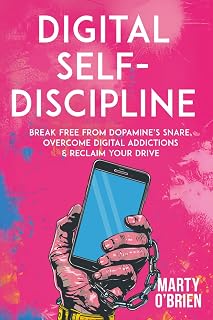
Digital Self-Discipline – Essential if your tracker lives on a phone.
Comparison: Top Self-Discipline Books to Read This Year
| Book | Price | Rating | Reviews | Best For | Buy at Amazon |
|---|---|---|---|---|---|
|
$0.00 (audible) | 4.8 | 148,600 | Habit building, small changes | Buy |
|
$16.83 | 4.6 | 11,200 | Mental toughness, self-control | Buy |
|
$12.93 | 4.7 | 8,800 | Stoic approach, daily discipline | Buy |
|
$0.00 (audible) | 4.7 | 27,900 | Self-sabotage, personal mastery | Buy |
|
$0.00 (audible) | 4.5 | 948 | Daily motivation, persistence | Buy |
|
$12.99 | 4.8 | 94 | Screen addictions, focus | Buy |
Frequently Asked Questions About Self Discipline Charts
How do I start a self discipline chart when I feel overwhelmed?
Start with one habit. On the first day, do it for 60 seconds. Check the box. That’s success. Add a second habit only when the first feels like second nature.
Should I use a paper or digital self discipline chart?
Paper is best if you need to disconnect from screens. Digital works if you want reminders and data. Try paper for 30 days first.
What if I miss a day? Do I restart?
No. Do not restart. Your chart is not a competition. Mark the miss, then continue. The goal is consistency over the long term, not perfection every day.
Can I track multiple goals on one chart?
Yes, but limit to three. More than that and the chart becomes cluttered and demotivating.
How long does it take for a habit to feel automatic?
Research varies from 18 to 254 days, with 66 being average. Your self discipline chart helps you survive the early weeks when it feels forced.
What is the best time of day to check my chart?
Morning, right after you wake up. Set the intention for the day. Or evening, to reflect on what you did. Both work; pick one and stick to it.
Do I need to track weekends?
Yes. Consistency means all seven days. Your weekends are not off-limits for good habits. Adjust the minimum dose if needed (e.g., 2 minutes of reading on Saturday).
Final Words: Your Chart, Your Future
A self discipline chart is not magic. It’s a mirror. It shows you exactly where you show up and where you hide. Most people prefer to stay blind, convincing themselves they “just need more willpower.” But willpower is not the problem.
The problem is the gap between intention and action. A chart bridges that gap by making action visible. Every check mark is a small vote for the person you want to become. Over weeks and months, those votes add up to a new identity.
So grab a pen, draw seven boxes, and fill the first one today. Your future self is already checking the rest.