
Table of Contents
Why Do I Lack Self Discipline? The Real Causes and Fixes Nobody Mentions
You planned to wake up early, eat clean, and crush your to-do list. Instead, you hit snooze three times, grabbed a sugary snack by noon, and binge-watched four episodes of a show you do not even like. Sound familiar? You are not broken. You are not lazy. The real question is not “Why am I so weak?” but why do I lack self discipline in the first place? The answer goes deeper than willpower. Let’s dig into the hidden causes and the fixes that actually work.
Most people assume self discipline is something you either have or you don’t. That is like saying you either know how to swim or you don’t without ever stepping into shallow water. Discipline is a skill, not a personality trait. And the reasons you struggle with it are often invisible to you.
| Product | Price | Rating | Description |
|---|---|---|---|
 |
$8.66 | 4.7 | Brian Tracy’s classic on mastering self control and mental toughness |
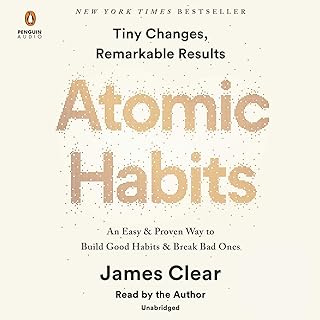 |
$0.00 (Audible) | 4.8 | James Clear’s breakthrough system for building habits through tiny changes |
Before we dive into the fixes, we need to expose why your brain keeps sabotaging your best intentions. No Excuses!: The Power of Self-Discipline by Brian Tracy is a great place to start understanding the mindset shift required. But even the best book won’t help unless you address the root causes.
The Hidden Causes of Self Discipline Failure
1. Dopamine Hijacking: Your Brain Is Wired for Short-Term Pleasure
Every time you check your phone, eat sugar, or watch a funny video, your brain releases dopamine. This reward chemical evolved to keep you alive by making you repeat actions that feel good. Problem is, modern life is a dopamine casino. Your brain learns that scrolling Instagram gives you a quick hit, while working on a tough project does not.
The result? You choose the easy, pleasurable task over the difficult, meaningful one. This is not a character flaw. It is biology. The fix is to understand that self discipline is often a battle against your own neurochemistry. You need to hack your environment to make the right choice the easy one.
2. Identity Mismatch: You Don’t See Yourself as a Disciplined Person
If you tell yourself “I’m just not a morning person” or “I’ve never been good at sticking to things,” you are reinforcing a limiting identity. James Clear explains that lasting change comes from identity-based habits. You do not lack discipline because you are weak. You lack discipline because you have not yet adopted the identity of someone who is disciplined.
Ask yourself: What would a disciplined person do? Then do that. Over time, your actions will reshape your self-image.
3. Perfectionism: The All-or-Nothing Trap
You decide to get healthy. You plan to work out seven days a week, meditate for an hour, and eat only kale. Then you miss one day. Your brain says, “Well, I already ruined it. Might as well eat the whole pizza.” This is called the “what-the-hell” effect. Perfectionism masquerades as high standards, but it actually destroys discipline because it leaves no room for human error.
Real discipline is about getting back on track quickly, not never falling off.
4. Decision Fatigue: Every Choice Drains Your Willpower
Willpower is like a muscle. It gets tired. By the end of the day, after deciding what to eat, what to wear, how to respond to emails, and whether to exercise, your mental energy is depleted. That is why you are more likely to binge Netflix at 10 p.m. than at 10 a.m.
The fix? Reduce trivial decisions. Automate what you can. Use routines to preserve willpower for what matters.
5. Lack of Systems: Relying on Motivation Is a Losing Strategy
Motivation is unreliable. It comes in waves and disappears when you need it most. If your discipline depends on feeling motivated, you will fail. The people who stick with habits do not rely on feeling ready. They have systems.
Atomic Habits is the ultimate blueprint for building systems that make discipline automatic. James Clear shows how small, 1% improvements compound into massive results. But even if you read it cover to cover, you need to implement the strategies.
The Fixes Nobody Talks About
Fix 1: Redesign Your Environment for Friction
Your environment is more powerful than your willpower. If you want to eat healthier, put the junk food in the garage or throw it away. If you want to read more, leave a book on your pillow. If you want to stop checking your phone, put it in another room.
- Make good habits easy: place your running shoes next to your bed.
- Make bad habits hard: use a website blocker, keep snacks out of sight.
This one change alone can double your chances of sticking to a habit.
Fix 2: Use Commitment Devices (Pre-Commit to Pain)
A commitment device is a choice you make now that locks in future behavior. Examples:
- Give a friend $100 and tell them to keep it if you skip the gym.
- Use an app that charges you if you break a streak.
- Set a non-refundable appointment for a workout class.
When the cost of quitting is high, you suddenly find the discipline you thought you lacked.
Fix 3: Build Identity-Based Habits
Stop saying “I’m trying to quit sugar.” Start saying “I’m not a sugar person.” The difference is subtle but powerful. When you base your habits on who you want to become, your actions align automatically.
| Identity Statement | Action Alignment |
|---|---|
| “I am a healthy eater.” | You naturally choose vegetables. |
| “I am a writer.” | You write every day, even if badly. |
| “I am a disciplined person.” | You show up consistently. |
Fix 4: Master Your Energy, Not Just Your Time
You can have all the time in the world, but if you are mentally drained, discipline crashes. Focus on your energy peaks. Do your hardest, most important work when you are freshest (for most people, that is morning).
- Sleep 7–9 hours. Sleep deprivation mimics ADHD and reduces impulse control.
- Eat for stable blood sugar. Protein and fiber keep glucose steady; sugar spikes then crashes your willpower.
- Take real breaks. Pomodoro technique (25 minutes work, 5 minutes break) restores focus.
Fix 5: The 5-Second Rule and Action Triggers
Mel Robbins popularized the 5-second rule: when you have an impulse to do something productive, count backward 5-4-3-2-1 and move before your brain talks you out of it. This bypasses the part of your brain that hesitates.
Pair this with implementation intentions. Instead of “I will exercise someday,” say “At 7 a.m. Monday, I will put on my shoes and walk out the door.” This creates a trigger that fires automatically.
Fix 6: Embrace Imperfect Action
Done is better than perfect. If you only have five minutes, do five minutes of work. If you only did half your workout, that is still more than zero. The people with the most discipline do not try to be perfect. They just refuse to stop.
Recommended Books to Build Self-Discipline
You can learn the principles, but sometimes you need a guide you can revisit again and again. Here are some of the best resources to deepen your understanding of self discipline.

The Power of Discipline by Daniel Walter. A no-nonsense guide to building mental toughness. It covers willpower science and practical exercises. Price: $16.83 | Rating: 4.6

The Psychology of Self-Discipline – 24 strategies to rewire your brain for consistent action. Price: $17.99 | Rating: 4.6

The Mountain Is You by Brianna Wiest. This book focuses on transforming self-sabotage into self-mastery. A deep psychological approach. Price: $0.00 (Audible) | Rating: 4.7

365 Days With Self-Discipline – daily wisdom from philosophers and thinkers to strengthen your resolve. Price: $0.00 (Audible) | Rating: 4.5

The Four Agreements by Don Miguel Ruiz. A classic that touches on personal freedom through discipline of thought and word. Price: $7.05 | Rating: 4.7

Discipline Equals Freedom by Jocko Willink. A raw, no-excuses field manual for mental toughness. Price: $12.93 | Rating: 4.7

Stoic Self-Discipline – 33 ancient secrets from Stoicism for unbreakable self control. Price: $19.99 | Rating: 4.7
Comparison Table: Top Self-Discipline Books
| Book | Price | Rating | Key Focus | Buy at Amazon |
|---|---|---|---|---|
|
$8.66 | 4.7 | Practical mindset shift, self control | Buy Now |
|
$0.00 (Audible) | 4.8 | Systems, habit stacking, identity change | Buy Now |
|
$0.00 (Audible) | 4.7 | Self-sabotage to self-mastery | Buy Now |
|
$12.93 | 4.7 | Field manual, mental toughness | Buy Now |
Frequently Asked Questions
Why do I lack self discipline even when I have clear goals?
Because having a goal is not enough. You need a system that makes the right action the path of least resistance. The real reason is often that your environment still favors the bad habit. Change your surroundings and you will see a shift.
Is self discipline genetic? Can it be learned?
No, it is not genetic. Self discipline is a learned skill. Anyone can improve it with consistent practice, just like building a muscle. Start small and increase the difficulty gradually.
How long does it take to build self discipline?
There is no magic number of days. However, research suggests that habits become automatic after about 66 days on average. The key is not to focus on the timeline but on showing up every day, even for five minutes.
What is the difference between self discipline and motivation?
Motivation is the desire to do something. Self discipline is the ability to do it even when you do not feel like it. Motivation fades; discipline endures. Rely on systems, not feelings.
Can lack of sleep affect my self discipline?
Absolutely. Sleep deprivation impairs the prefrontal cortex, the part of the brain responsible for impulse control. Prioritizing sleep is one of the most effective ways to boost discipline overnight.
Which book should I start with if I struggle with discipline?
Atomic Habits is the most practical and science-backed. It gives you a step-by-step framework. Pair it with No Excuses! for mindset reinforcement.
Final Word: You Are Capable of More Than You Think
The next time you ask yourself “why do i lack self discipline,” remember that the answer is not a character flaw. It is a combination of biology, environment, and identity. You do not need to become a different person. You need to change your systems, reduce friction, and start acting like the person you want to become.
Pick one fix from this article. Apply it for seven days. Watch what happens. And if you need a daily dose of wisdom, grab a copy of 365 Days With Self-Discipline or Mindful Self-Discipline. The journey to mastery begins with a single, disciplined choice. Make that choice now.