
You’ve tried the motivational quotes, the morning routines, the “just do it” pep talks. Yet somehow, the cookie jar calls louder than the gym, and your phone feels magnetic. Why does sticking to your goals feel like an uphill battle against your own brain?
The answer lives in self discipline science, the study of what makes willpower tick, motivation spark, and lasting change stick. This isn’t about white knuckling or shame spirals. It’s about understanding the biological, psychological, and environmental forces that shape your behavior every single day.
Let’s cut through the noise. Here’s what actually drives willpower, motivation, and long term change according to real research and practical wisdom.
Table of Contents
What Is Self Discipline Science?
Self discipline science is the interdisciplinary field that examines how humans regulate their thoughts, emotions, and actions to achieve long term goals. It draws from neuroscience, psychology, behavioral economics, and even ancient philosophy.
At its core, self discipline science asks: Why do we do what we know we shouldn’t, and how can we stop? And more importantly: How can we train our brains to choose the hard right over the easy wrong?
The search for answers has produced a flood of books and resources. Some of the best are listed below, each offering a unique lens on the same challenge: mastering yourself.
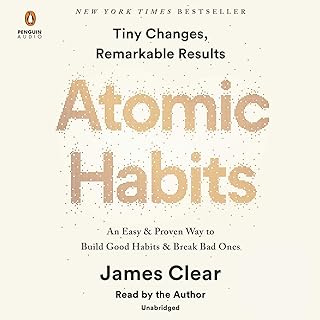
James Clear’s Atomic Habits is a cornerstone of self discipline science. It shows that tiny changes, repeated consistently, compound into extraordinary results. But habits are just one piece of the puzzle.
The Neuroscience of Willpower: Your Brain’s Battery
Willpower isn’t a magical force. It’s a finite resource that runs on glucose and neural circuitry. The self discipline science behind willpower centers on the prefrontal cortex, the part of your brain responsible for decision making, impulse control, and planning.
When you resist a temptation, your prefrontal cortex works hard. Over time, it gets tired. Researchers call this ego depletion. Think of it as your willpower battery draining throughout the day.
How to protect that battery:
- Sleep well. A tired brain has less capacity for self control.
- Eat smart. Stable blood sugar levels keep your prefrontal cortex fueled.
- Reduce decisions. Automate small choices (what to wear, what to eat) to save mental energy for big ones.
You can’t avoid all temptations, but you can design your environment to make willpower less necessary. That’s a key insight from self discipline science: don’t fight the current, redirect it.
Motivation: The Emotional Engine of Discipline
Motivation gets a bad rap. Some gurus say “motivation is garbage, only discipline matters.” That’s half true. Motivation is unreliable, but it’s also the spark that ignites action. The trick is to use it wisely.
Self discipline science reveals that motivation follows action more than the other way around. You don’t wait for motivation to start; you start and motivation follows.
Three pillars of sustainable motivation:
- Autonomy – You feel in control of your choices.
- Competence – You believe you can succeed.
- Relatedness – Your goal connects to something or someone meaningful.
When your goal lacks these three, your brain sees it as a chore. No wonder you procrastinate.
To rebuild motivation, reframe your “have to” into “choose to.” And celebrate small wins. Each win releases dopamine, the brain’s reward chemical, reinforcing the behavior you want to repeat.
Long Term Change: Why Habits Beat Willpower
The biggest breakthrough in self discipline science is the realization that lasting change doesn’t come from heroic effort. It comes from systems.
Habits are automated behaviors that run on autopilot. Once a habit is formed, you barely need willpower to execute it. The opposite is also true: bad habits run on autopilot, too.
James Clear’s Atomic Habits (4.8 stars, available free on Audible) provides the iconic framework:
| Cue | Craving | Response | Reward |
Break a bad habit by making the cue invisible, the craving unattractive, the response difficult, and the reward unsatisfying. Build a good habit by doing the opposite.
Another powerful resource is The Power of Habit by Charles Duhigg (though not in our product list, but we can use The Power of Discipline which we have). However, from the selected products, The Power of Discipline ($16.83, 4.6 stars) offers practical exercises to build mental toughness and self control.

The Environment Effect: You Are Your Context
Self discipline science has a dirty secret: your environment controls you more than you think. Brian Wansink’s research on eating habits showed that people eat more from large bowls and larger packages without noticing. The same principle applies to every area of life.
You can’t out willpower a junk food filled kitchen. You can’t stay focused on work when your phone buzzes every two minutes. The environment is the invisible hand of discipline.
Steps to redesign your environment:
- Remove friction for good habits. Put your gym clothes next to the bed.
- Add friction for bad habits. Keep your phone in another room at night.
- Use commitment devices. Pre order your lunch or use an app to block social media.
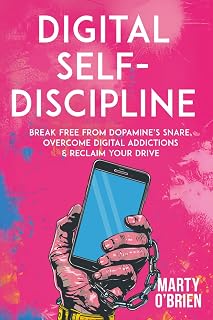
Digital distractions are a modern plague. The book Digital Self-Discipline: Break Free from Dopamine’s Snare ($12.99, 4.8 stars) dives deep into breaking phone addiction and reclaiming your drive.
The Stoic Connection: Ancient Wisdom Meets Modern Science
You might think self discipline science is all brain scans and lab studies. But much of the field’s best insights come from ancient philosophy, especially Stoicism.
The Stoics argued that we can’t control external events, only our responses. That’s the ultimate self discipline. They practiced voluntary discomfort to build resilience: sleeping on a hard floor, fasting, walking in the cold. Modern research confirms that mild stress inoculation strengthens willpower.
Discipline Is Destiny: The Power of Self Control ($5.88, 4.7 stars) by Ryan Holiday applies Stoic principles to self mastery. It’s part of his Stoic Virtues series and a favorite among readers.

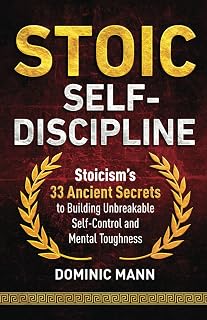
Another great pick is Stoic Self-Discipline: Stoicism’s 33 Ancient Secrets ($19.99, 4.7 stars) which directly ties ancient wisdom to building unbreakable self control.
Self Sabotage: The Mountain You Must Climb
Brianna Wiest’s The Mountain Is You: Transforming Self Sabotage into Self Mastery (4.7 stars, free on Audible) explores why we undermine our own success. Self discipline science recognizes that self sabotage often stems from fear, not laziness. We fear success because it brings expectations. We fear failure because it hurts our identity.
The solution is to separate your worth from your outcomes. Build an identity as someone who does hard things, regardless of immediate results. That identity becomes the anchor for your discipline.
“You can’t change what you don’t acknowledge.” – Brianna Wiest

Practical Frameworks from the Best Books on Self Discipline Science
The following table compares top resources that every student of self discipline science should consider.
| Book | Price | Rating | Key Focus | Buy at Amazon |
|---|---|---|---|---|
 |
$0.00 (Audible) | 4.8 | Habit formation, small changes, systems | Buy |
 |
$0.00 (Audible) | 4.5 | Willpower, mental toughness, resisting temptation | Buy |
 |
$8.66 | 4.7 | Self discipline as a habit, success mindset | Buy |
|
$16.83 | 4.6 | Self control, mental toughness, goal achievement | Buy |
|
$5.88 | 4.7 | Stoic philosophy, self control, virtue | Buy |
|
$0.00 (Audible) | 4.7 | Self sabotage, emotional awareness, self mastery | Buy |
 |
$0.00 (Audible) | 4.5 | Daily discipline thoughts, mental resilience | Buy |
|
$12.99 | 4.8 | Digital addiction, dopamine, focus | Buy |
|
$19.99 | 4.7 | Stoic secrets, mental toughness | Buy |
 |
$7.05 | 4.7 | Personal freedom, inner peace, discipline of word | Buy |
The Motivation Myth: You Don’t Need to Feel Ready
One of the most liberating findings in self discipline science is that action creates motivation. You don’t need to feel inspired to start. You just need to start.
The 2 minute rule from Atomic Habits is perfect here: scale down your habit until it takes less than two minutes. Want to write a book? Write one sentence. Want to exercise? Put on your shoes. The momentum from that tiny action often carries you forward.
When you feel stuck, ask: What’s the smallest possible step I can take right now? Then take it. Don’t wait for the perfect conditions. They never arrive.
How to Build Unbreakable Self Control Over Time
Self discipline science isn’t about being perfect every moment. It’s about building a system that makes discipline easier over time.
Key strategies:
- Track your progress. What gets measured gets managed. Use a journal or app.
- Use “if then” plans. “If it’s 7 AM, then I go for a run.” This bypasses decision fatigue.
- Embrace failure as data. You didn’t fail because you’re weak. You failed because your plan wasn’t strong enough. Adjust and try again.
- Find a community. Accountability multiplies willpower. Join a group or find a partner.
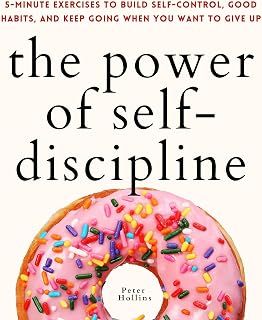
The book The Power of Self-Discipline: 5 Minute Exercises to Build Self Control (4.4 stars, free on Audible) offers quick daily practices to strengthen your discipline muscle.
The Role of Belief: I Can Change
Stanford psychologist Carol Dweck’s research on growth mindset shows that people who believe their abilities can improve actually do improve more. If you believe willpower is limited, you’ll hit a wall faster. If you believe you can develop it, you’ll push through.
Self discipline science supports the idea that willpower is like a muscle. It can be strengthened with consistent training. You don’t have to be born disciplined. You can learn it.
That’s why books like Mindful Self-Discipline: Living with Purpose (4.7 stars, free on Audible) combine mindfulness with goal achievement. Being present and aware helps you catch yourself before you slide into autopilot.

Conclusion: The Mastery of Self Discipline Science Is a Journey
There is no magic pill. Self discipline science offers tools, not shortcuts. The research is clear: lasting change requires understanding your brain, designing your environment, and building habits that make the right thing easy.
Start where you are. Pick one small change. Read one of the books we’ve linked. Apply what you learn. Repeat.
You don’t need to be perfect. You just need to be persistent. And now you have the science to back you up.
Frequently Asked Questions About Self Discipline Science
What is the science behind self discipline?
Self discipline science combines neuroscience (how the prefrontal cortex controls impulses), psychology (habits, motivation, ego depletion), and behavioral economics (environment design, commitment devices). It studies why people act against their long term interests and how to align behavior with goals.
How can I improve my willpower according to research?
Research suggests willpower can be strengthened through practice, glucose management (eating regular meals), sleep, and reducing decision fatigue. Using “if then” plans and designing your environment to remove temptations also helps preserve willpower.
What is ego depletion and is it real?
Ego depletion is the idea that self control depletes a limited mental resource. While controversial, many studies support that after exercising self control, people perform worse on subsequent tasks. However, belief in unlimited willpower can reduce this effect.
Which books are best for learning self discipline science?
Top books include Atomic Habits (James Clear), The Science of Self Discipline (Peter Hollins), No Excuses! (Brian Tracy), The Power of Discipline (Daniel Walter), and Discipline Is Destiny (Ryan Holiday). Each offers practical frameworks.
Can self discipline be learned, or is it innate?
Self discipline is a skill that can be learned and improved. While some people have genetic advantages in impulsivity, everyone can train their self regulation through deliberate practice, habit formation, and mindset shifts.
How does dopamine affect motivation and discipline?
Dopamine is released when you anticipate a reward. It drives motivation to seek pleasure. Self discipline science uses this by creating immediate small rewards for good habits (dopamine hits) and removing immediate rewards for bad habits.
Is motivation or discipline more important for long term success?
Discipline is more reliable because motivation fluctuates. However, motivation can spark initial action. The best approach uses motivation to start and discipline to continue. Relying solely on willpower often leads to burnout.
What is the best way to break a bad habit?
Use the inverse of the habit loop: make the cue invisible (remove triggers), make the craving unattractive (reframe thoughts), make the response difficult (add friction), and make the reward unsatisfying (find a substitute). Also, replace the bad habit with a good one.
How can I stay disciplined when I feel depressed or low energy?
Start extremely small. Lower the bar to a tiny action (brush teeth, drink water, step outside). Self compassion is crucial. Treat yourself like you would a friend. Focus on one tiny win per day. Seek professional help if depression persists.
What is the relationship between self discipline and happiness?
Moderate self discipline is linked to higher life satisfaction because it helps you achieve long term goals, avoid regret, and cultivate healthy relationships. However, extreme rigidity can reduce happiness. Balance is key.