
Self-discipline isn’t about being perfect. It’s about showing up for yourself when it’s easier to quit.
You’ve heard the motivational quotes. You’ve read the blog posts. But what does self-discipline actually look like in real life? Not in theory, not in a TED Talk, but in the messy, boring, everyday moments where your future is decided.
In this guide, you’ll find 8 examples of self discipline that you can steal and apply immediately. No fluff. No fake gurus. Just real scenarios, clear steps, and the exact tools that high-performers use to stay on track. If you’re serious about building willpower, mental toughness, and unshakeable habits, these examples are your blueprint.
Let’s start with a scenario you probably know well.
Table of Contents
Example 1: Waking Up at 5:00 AM and Actually Getting Out of Bed
The alarm buzzes. Your brain whispers “just five more minutes.” You hit snooze. Then again. Suddenly it’s 7:00 AM and you’re rushing through the morning like a panic attack.
The self-disciplined version of you doesn’t negotiate with the snooze button. They’ve decided the night before that when the alarm goes off, their feet hit the floor. No decision required.
Why it works: Self-discipline thrives on pre-commitment. By removing the choice in the moment, you remove the temptation to talk yourself out of it.
Real-life copyable strategy:
- Place your alarm clock (or phone) across the room so you must stand up to turn it off.
- Set a one-sentence intention before bed: “When the alarm rings, I will stand up and go to the bathroom.”
- Have your workout clothes or coffee mug ready the night before.
This simple act of morning discipline compounds into massive gains over time. As Admiral William H. McRaven wrote in his bestselling book, Make Your Bed: Little Things That Can Change Your Life…And Maybe the World, starting the day by completing a small task sets the tone for the rest of the day. The book is a short, powerful read that reinforces the idea that discipline starts with small, consistent actions. If you want a practical boost to your morning routine, grab a copy.

Example 2: Saying No to a Second Slice of Cake
You’re at a birthday party. Everyone is having a great time. The cake looks incredible. You already had one piece. Your hand hovers over the plate.
Self-discipline isn’t about deprivation. It’s about choosing your long-term well-being over a moment of pleasure. In this scenario, you pause and ask yourself: Will this second slice take me closer to or further from my health goal?
Real-life copyable strategy:
- Use the 10-minute rule: Tell yourself you can have the second slice after waiting ten minutes. Often the craving passes.
- Pre-decide your limit before the event. Write it down if you have to.
- Visualize how you’ll feel after eating it: sluggish, guilty, or satisfied with your control.
This kind of impulse control is a muscle. The more you use it, the stronger it gets. The book The Power of Discipline: How to Use Self Control and Mental Toughness to Achieve Your Goals dives deep into building that muscle with practical exercises. It’s rated 4.6 stars and is a fantastic companion for anyone struggling with instant gratification.

Example 3: Going to the Gym When You’re Tired and Demotivated
You want to chase your goals, but your body screams for the couch. Your mind creates a thousand reasons to skip: you’re too tired, you’ll go tomorrow, you already worked out three times this week.
Self-discipline shows up on days when motivation is nowhere to be found. It’s the decision to put on your shoes and drive to the gym, even if you do a half-assed workout. Because doing something is better than doing nothing.
Real-life copyable strategy:
- Make your workout so small it’s laughable. Commit to just five minutes of movement. Once you start, inertia keeps you going.
- Use the “Don’t Break the Chain” method: mark an X on your calendar for every day you show up.
- Remind yourself that discipline equals freedom. By working out today, you earn the freedom to feel strong, healthy, and capable tomorrow.
Jocko Willink’s Discipline Equals Freedom: Field Manual Mk1-MOD1 is literally built around this mindset. It’s a no-nonsense guide that motivates you to embrace suffering for the sake of growth. With a 4.7 rating and over 8,800 reviews, it’s a proven resource for building mental toughness.

Example 4: Studying for a Certification Instead of Scrolling TikTok
You have a big exam in two months. You sit down to open your textbook. Then your phone buzzes. You “just check” one video. Two hours later, you’ve learned nothing about supply chain management but a lot about dancing cats.
Self-discipline in this context is about environment design. You can’t rely on willpower alone to fight infinite scrolling. You need to make the wrong choice harder and the right choice easier.
Real-life copyable strategy:
- Put your phone in another room or use a distraction-blocking app.
- Use the Pomodoro technique: 25 minutes of focused work, 5 minutes break.
- Reward yourself after each study session with a small treat (a short walk, a chocolate).
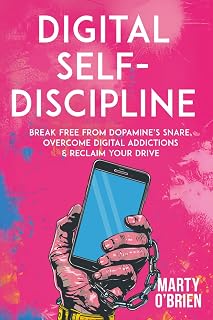
To go deeper on breaking digital addiction, check out Digital Self-Discipline: Break Free from Dopamine’s Snare, Overcome Digital Addictions & Reclaim Your Drive. It’s a newer book with a perfect 4.8 rating, specifically targeting the attention crisis we all face.
Example 5: Saving Money by Skipping the Daily Latte
A $5 coffee each workday is $1,300 a year. That’s a vacation, an emergency fund, or a significant chunk of debt paid off. But your brain craves the ritual, the taste, the pause in your routine.
Self-discipline with money is about remembering your bigger goals. You don’t cut the coffee forever; you replace it with a cheaper alternative or make it a weekly treat instead of a daily one.
Real-life copyable strategy:
- Use a 24-hour rule for any non-essential purchase. Wait a day before clicking “buy.”
- Create a visual reminder of your financial goal (a photo of your dream house or debt-free chart).
- Automate your savings so the money never hits your checking account.
The book Yes to You, No to Them: The Discipline of Saying No and the Freedom that Follows directly addresses the power of refusal in financial and personal boundaries. It’s a rare gem with a 5-star rating.

Example 6: Doing Your Most Important Task First (Eat the Frog)
Mark Twain supposedly said, “Eat a live frog first thing in the morning, and nothing worse will happen to you the rest of the day.” The frog is your biggest, most unpleasant task. The one you keep procrastinating on.
Self-discipline means tackling that frog before you check email, Slack, or social media. Why? Because your willpower is highest in the morning. You want to deploy it against the hardest challenge.
Real-life copyable strategy:
- Write down your “one big task” every morning before you start work.
- Set a timer for 60 minutes and do nothing else until the timer goes off.
- Celebrate with a small win after completing it (a cup of tea, a walk).
This technique is a core part of Brian Tracy’s classic No Excuses!: The Power of Self-Discipline. The book is a complete manual on taking ownership of your life, with a 4.7 rating and thousands of reviews. It’s a must-read for anyone who wants to stop making excuses.

Example 7: Practicing a Skill for 30 Minutes Every Single Day
You want to learn Spanish. You buy the course, practice for three days, then life gets in the way. A month later, you remember you have a subscription you’re not using.
Self-discipline in skill-building is about consistency over intensity. One hour daily for a year is 365 hours. Twenty minutes daily for a year is over 120 hours. That’s fluency territory, not just “I know how to order a beer.”
Real-life copyable strategy:
- Use a habit tracker app or a physical calendar. Mark an X each day you practice.
- Keep your study materials visible and accessible. Out of sight, out of mind is real.
- Stack the habit onto an existing routine: “After I brush my teeth, I will practice for 30 minutes.”
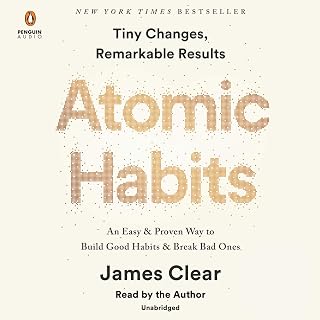
James Clear’s Atomic Habits: An Easy & Proven Way to Build Good Habits & Break Bad Ones is the gold standard for this approach. It’s the highest-rated and most-reviewed book on our list (4.8 stars, 148,600+ reviews), and it provides the exact systems you need to build habits that stick.
Example 8: Staying Calm During a Heated Argument
You’re in a disagreement with a partner, colleague, or family member. Your emotions flare. Your voice rises. You want to win the argument, not resolve it.
Self-discipline here is emotional regulation. It’s the ability to pause before reacting, choose your words carefully, and stay focused on the outcome you actually want (a healthy relationship, a resolved issue), not the short-term satisfaction of being right.
Real-life copyable strategy:
- Count to five before responding. This interrupts your amygdala hijack.
- Use “I” statements instead of “you” accusations. (“I feel frustrated when…” vs “You always…”)
- If needed, ask for a break and return to the conversation after both of you have cooled down.
The ancient philosophy of Stoicism offers incredible tools for this scenario. Ryan Holiday’s Discipline Is Destiny: The Power of Self-Control (part of The Stoic Virtues Series) beautifully explains how self-control is the foundation of a good life. The book has a 4.7 rating and is a compelling read.

Comparison of Top Self-Discipline Books
If you want to supercharge your self-discipline journey, these books are your best allies. Below is a comparison of the most popular titles mentioned in this article. Each one brings a unique angle.
| Product | Price | Rating | Best For | Buy at Amazon |
|---|---|---|---|---|
 Atomic Habits Atomic Habits |
Free (audiobook) or $11.99 (paperback) | 4.8 | Building tiny habits, systems thinking | Buy Now |
 No Excuses! No Excuses! |
$8.66 | 4.7 | Taking ownership, killing procrastination | Buy Now |
 Discipline Equals Freedom Discipline Equals Freedom |
$12.93 | 4.7 | Military-style toughness, embracing pain | Buy Now |
 The Power of Discipline The Power of Discipline |
$16.83 | 4.6 | Mental toughness, action-focused goals | Buy Now |
 The Mountain Is You The Mountain Is You |
Free (Kindle Unlimited) | 4.7 | Overcoming self-sabotage, emotional mastery | Buy Now |
Each of these books tackles self-discipline from a different angle. If you’re just starting, Atomic Habits is the most practical system. If you need a kick in the pants, No Excuses! or Discipline Equals Freedom are excellent. For inner work and self-sabotage, The Mountain Is You is a game-changer.
Why Self-Discipline Is the Key to Everything
You may have noticed a pattern in all these examples. Self-discipline isn't about restricting yourself; it's about aligning your daily actions with your deepest values. Every time you choose the harder right over the easier wrong, you build self-trust. You prove to yourself that you are someone who can be counted on.
The real-life scenarios above are not theoretical. They happen in kitchens, gyms, offices, and bedrooms every single day. The difference between those who achieve their goals and those who don’t is rarely talent or luck. It’s the ability to do the thing you said you would do, long after the mood you said it in has left you.
FAQ About Self-Discipline
What is the best way to start building self-discipline?
The best way is to pick one small area of your life and commit to a tiny change. For example, decide to make your bed every morning for one week. Success in that small task will create momentum. As James Clear says, “You do not rise to the level of your goals. You fall to the level of your systems.”
How long does it take to develop self-discipline?
There is no fixed number of days. Self-discipline is a habit, and like any habit, it gets stronger with practice. Some studies suggest it takes about 66 days for a new behavior to become automatic, but your mileage will vary. The key is consistency, not speed.
Can self-discipline be learned, or is it innate?
Absolutely learned. Self-discipline is a skill, not a personality trait. Your brain can rewire itself through deliberate practice. The more you exercise control over your impulses, the stronger your prefrontal cortex becomes. Anyone can develop self-discipline, regardless of their starting point.
What is the difference between self-discipline and motivation?
Motivation is an emotion; it comes and goes. Self-discipline is a system you depend on when motivation disappears. You cannot rely on motivation to finish a project, lose weight, or learn a language. You must rely on discipline—the ability to act according to your plan, not your feelings.
How do I stop making excuses?
Excuses are stories you tell yourself to avoid discomfort. The first step is to catch yourself when you start rationalizing. Then, ask, “What is the one thing I can do right now to move forward?” Brian Tracy’s No Excuses! is an excellent resource for this. It teaches you to take 100% responsibility for your life.
Conclusion: Your Turn to Act
You now have 8 examples of self discipline that you can copy starting today. From waking up earlier to saying no to cake, from hitting the gym to practicing a skill, these scenarios are your roadmap.
Don’t try to change everything overnight. Pick one example that resonates most with your current struggle. Implement the strategy for just one week. Track your progress. Notice how your self-confidence grows.
Remember, every act of self-discipline is a deposit in the bank of your future self. The more you deposit, the richer your life becomes.
Your next step: Choose one example from this list. Write it down. Do it tomorrow morning. Then come back and tell us how it went.
Success Guardian is here to help you build a life of purpose and discipline. Stay strong.