
You've heard the terms thrown around like interchangeable motivational badges. Just be more disciplined. Practice self control. But if they mean the same thing, why does one feel achievable while the other feels like climbing Everest on a Monday morning?
Here's the truth: self discipline and self control are not the same muscle. They work together like an engine and a steering wheel. Master the difference, and you stop spinning your wheels.
We're going to break down exactly what separates them, why conflating them holds you back, and how to train both so your goals stop being wishes and start becoming reality.
Table of Contents
What Is Self Discipline? (And Why It's Not Just About Willpower)
Self discipline is the ability to keep showing up to a task even when motivation has ghosted you. It's the habit of doing what needs to be done now, not because you feel like it, but because you've made a commitment to a long-term outcome.
Think of self discipline as a proactive, habitual engine. You build it through repetition and structure. It doesn't rely on how you feel in the moment. You wake up at 5 AM not because you're excited, but because you've trained your brain to treat that time as non-negotiable.
Brian Tracy, author of No Excuses!: The Power of Self-Discipline, puts it this way: self discipline is the ability to make yourself do what you should do, when you should do it, whether you feel like it or not.
That definition hits the core. Self discipline is about action over emotion.

Key Characteristics of Self Discipline
- It's routine-based. You create systems that run on autopilot.
- It's forward-looking. You're serving your future self.
- It thrives on consistency, not intensity.
- It requires delayed gratification as a default setting.
A disciplined person doesn't wait for a surge of motivation to hit. They have a framework that carries them through the tough days.
What Is Self Control? (The Moment-To-Moment Brake Pedal)
Self control, on the other hand, is the ability to resist an immediate temptation or impulse in a specific moment. It's reactive rather than proactive.
When you're on a diet and someone puts a plate of fresh cookies in front of you, self control is what stops your hand from reaching out. When you feel the urge to check your phone during deep work, self control is what keeps your eyes on the screen.
Self control is like a brake pedal for impulses. It's a limited resource that fatigues with use. That's why you're more likely to snap at your partner after a long day of resisting distractions.
Key Characteristics of Self Control
- It's situational. It fires up when temptation appears.
- It relies on momentary willpower.
- It drains your mental energy over time (ego depletion).
- It's best used as a last line of defense, not your primary strategy.
James Clear, author of Atomic Habits: An Easy & Proven Way to Build Good Habits & Break Bad Ones, calls this the difference between "making good choices easier" (self discipline) and "fighting bad impulses" (self control). The former lasts.

Self Discipline vs Self Control: The Simple Breakdown
Let's put them side by side so the difference feels obvious.
| Aspect | Self Discipline | Self Control |
|---|---|---|
| Nature | Proactive, habitual | Reactive, momentary |
| Energy cost | Low over time (automatic) | High in the moment |
| Best for | Building long-term habits | Handling acute temptations |
| Example | Writing every morning at 7 AM | Resisting the urge to check Instagram during a meeting |
| Reliability | High (trained system) | Low (depletes quickly) |
| Dependency | Low on feelings | High on willpower reserves |
You can think of self discipline as the infrastructure of your life. Self control is the emergency brake. If you rely solely on the brake, you'll burn it out.
Why Most People Confuse Them (And Why It Hurts)
Here's where things get messy. Many self-help gurus throw both terms around like they're synonyms. They aren't.
When you confuse them, you end up trying to "power through" everything with willpower. That's exhausting. It leads to burnout and shame when you inevitably slip.
The smarter approach is to invest in self discipline first, so you need less self control in your daily life.
For example, if you have the self discipline to prepare a healthy lunch every evening, you won't need self control to avoid the vending machine at noon. You already made the better choice in advance.
That's the secret that books like Make Your Bed: Little Things That Can Change Your Life…And Maybe the World by Admiral William H. McRaven emphasize: small disciplined actions compound into enormous control.

How Self Discipline and Self Control Work Together
The real power comes when you use both intentionally. Think of them as partners.
Self discipline builds the structure. Self control handles the curveballs.
-
You use self discipline to create a morning routine that includes meditation, exercise, and planning your day.
-
You use self control when a colleague invites you for a spontaneous lunch that would break your diet and derail your afternoon focus.
-
You use self discipline to study for an hour every evening.
-
You use self control to close the browser tab when an interesting YouTube thumbnail appears.
The goal is to minimize the number of times you need to rely on self control. Each time you use it, you deplete your reserves. But every disciplined habit you build adds to your reserves over time.
Ryan Holiday, author of Discipline Is Destiny: The Power of Self-Control (The Stoic Virtues Series), argues that true freedom comes not from doing whatever you want, but from mastering yourself through disciplined choices. The more you practice self discipline, the less you have to flex self control.

Practical Strategies to Build Self Discipline (Step by Step)
Building self discipline doesn't require heroic effort. It requires smart, repeatable actions. Here's how to start.
1. Create Keystone Habits
A keystone habit is one small routine that triggers a cascade of positive behaviors. For example, making your bed every morning sets a tone of order. Fifteen minutes of daily exercise improves mood and energy.
Choose one habit that will act as your discipline anchor. Focus on it until it becomes automatic.
2. Use Implementation Intentions
Research shows that specific plans dramatically increase follow-through. Instead of saying "I'll exercise more," say "I will run for 20 minutes at 6 AM in my living room right after I brush my teeth."
This technique bridges intention and action. It turns self discipline from a vague hope into a concrete trigger.
3. Stack Habits
Link a new disciplined behavior to an existing one. After you pour your morning coffee (existing), you meditate for two minutes (new). The old habit becomes the cue for the new one.
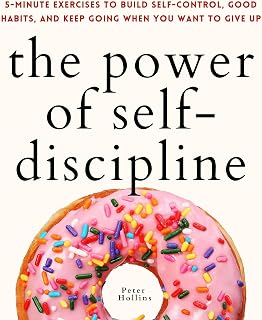
This method from The Power of Self-Discipline: 5-Minute Exercises to Build Self-Control, Good Habits, and Keep Going When You Want to Give Up works because it leverages your existing neural pathways.
Practical Strategies to Strengthen Self Control (When You Really Need It)
Even with excellent self discipline, you'll face moments of temptation. Here's how to fortify your self control.
1. Reduce Decision Fatigue
Every decision you make during the day drains mental energy. Wardrobe choices, what to eat, which email to answer first. By simplifying routine decisions, you preserve willpower for the big moments.
Steve Jobs wore the same outfit every day for this reason. You don't need to go that far, but batch your low-stakes decisions.
2. The 10-Minute Rule
When a craving hits, tell yourself you can give in, but only after waiting 10 minutes. In that time, the intense urge often subsides. Your rational brain gets a chance to re-engage.
This simple delay tactic is one of the most effective ways to use self control sparingly.
3. Change Your Environment
Your environment shapes your behavior more than your willpower. If you keep cookies in the kitchen, you'll eat them when you're tired. If you don't buy them, you never need to resist.
Jocko Willink, author of Discipline Equals Freedom: Field Manual Mk1-MOD1, argues that discipline is not about fighting temptation but about designing a life where temptation never appears. Remove the option.

The Daily Practice: A Routine That Uses Both
You need a practical daily framework. Here's a sample that integrates self discipline and self control.
Morning (Self Discipline Phase)
- Wake up at the same time every day (discipline).
- Do a five-minute gratitude or journaling session (discipline).
- Review your top three priorities for the day (discipline).
No self control needed yet because you haven't faced any temptations.
Midday (Self Control Phase)
- You get an impulse to scroll social media. Use the 10-minute rule.
- A coworker offers you a donut. Thank them and say "maybe later."
- You feel your focus slipping. Take a two-minute breathing break.
These small self control wins preserve your later energy.
Evening (Reflection Phase)
- Review what went well and where you slipped.
- Adjust your environment overnight to make tomorrow easier.
- Go to bed at a consistent time to support tomorrow's discipline.
This cycle builds on itself. You wake up stronger each day.
Recommended Books on Self Discipline and Self Control
Reading is one of the best ways to reinforce your understanding. Here are top-rated books that dive deep into this topic.
| Book | Author | Price | Rating | Image | Buy at Amazon |
|---|---|---|---|---|---|
| No Excuses!: The Power of Self-Discipline | Brian Tracy | $8.66 | 4.7 | |
Buy Now |
| Atomic Habits | James Clear | $0.00 (Audible) | 4.8 | |
Buy Now |
| Discipline Is Destiny | Ryan Holiday | $5.88 | 4.7 | |
Buy Now |
| The Science of Self-Discipline | Peter Hollins | $0.00 (Audible) | 4.5 |  |
Buy Now |
| The Power of Discipline | Daniel Walter | $16.83 | 4.6 |  |
Buy Now |
| The Psychology of Self-Discipline | Leila R. Berman | $17.99 | 4.6 |  |
Buy Now |
| The Mountain Is You | Brianna Wiest | $0.00 (Audible) | 4.7 |  |
Buy Now |
| 365 Days With Self-Discipline | Martin Meadows | $0.00 (Audible) | 4.5 |  |
Buy Now |
| The Four Agreements | Don Miguel Ruiz | $7.05 | 4.7 |  |
Buy Now |
| Digital Self-Discipline | Samuel S. Sharpe | $12.99 | 4.8 |  |
Buy Now |
Common Mistakes People Make with Self Discipline and Self Control
Even well-intentioned people stumble. Avoid these traps.
Relying Only on Motivation
Motivation is a fleeting emotion. It shows up when conditions are perfect, then disappears when you need it most. Use self discipline to build systems that work regardless of motivation.
Trying to Change Everything at Once
Your willpower is like a battery. If you try to overhaul your diet, exercise, sleep, and work habits in one week, you'll crash. Pick one domain, build discipline there, then expand.
Ignoring Recovery
Self control depletes. Sleep, good nutrition, and breaks replenish it. Don't treat self discipline as a 24/7 grind. Schedule rest like you schedule work.
How to Measure Progress in Self Discipline and Self Control
You can't improve what you don't track. Here are metrics that matter.
- Completion rate of your keystone habit each week.
- Number of times you gave in to a known temptation (track honestly).
- Energy levels at the end of the day. If you feel drained, you leaned too hard on self control.
- Goal progress over 30 days. Are you moving toward your target?
Use a simple journal or an app. The act of tracking reinforces discipline.
The Neuroscience Behind Self Discipline and Self Control
Your prefrontal cortex is the CEO of your brain. It handles decision-making, impulse inhibition, and long-term planning. Self control heavily taxes this region.
When you use self control repeatedly, your prefrontal cortex fatigues. That's why you're more likely to eat junk food at night after a day of hard decisions.
Self discipline, by contrast, shifts behaviors from the prefrontal cortex to the basal ganglia. That's the part of your brain that handles habits. Once a behavior is a habit, it requires almost no conscious effort.
This is why building disciplined routines is more sustainable than fighting impulses. You're literally rewiring your brain.
Frequently Asked Questions
Can you have too much self discipline?
Yes. Rigid self discipline without flexibility can lead to burnout, anxiety, and a lack of joy. The healthiest approach is "flexible discipline": you have strong systems but allow for planned exceptions.
Is self control genetic?
Partially. Some people have a naturally higher capacity for impulse control. But both self control and self discipline are trainable skills. You can improve them at any age.
How long does it take to build self discipline?
Studies suggest it takes between 18 and 254 days to form a habit, with an average of 66 days. The key is consistency, not speed.
What's the best way to boost self control for a specific situation?
Remove the temptation from your environment. If you can't, use the 10-minute rule and remind yourself of your long-term goal. A short mantra like "I am someone who follows through" can help.
Can meditation improve self discipline?
Absolutely. Meditation trains your ability to focus and resist impulses. Even five minutes a day strengthens the prefrontal cortex. It's a foundational discipline practice.
Is it better to focus on self discipline or self control first?
Focus on self discipline first. Build routines and systems that make good behaviors automatic. Then use self control as a backup for unexpected situations.
Your Next Step: One Single Act
The difference between knowing and doing is action. You've read the distinction between self discipline and self control. Now choose one small thing.
Maybe it's making your bed tomorrow morning. Maybe it's writing for ten minutes. Maybe it's removing cookies from your kitchen.
Whatever it is, do it. Not because you feel like it, but because you're building a system that doesn't rely on feelings.
That single act is the seed of self discipline. Water it daily, and self control becomes a tool you rarely need to pull out.
The life you want is not behind a wall of willpower. It's built brick by brick, through daily discipline and strategic control.
Start today. Your future self is counting on you.