
Let’s be real for a second. You’ve tried to improve self discipline before. Maybe you downloaded a habit tracker, bought a planner, or told yourself “this Monday is the day.” Then life happened. You snoozed the alarm, ate the cookie, skipped the workout. Sound familiar?
Here’s the truth: willpower is not the answer. The real path to self-discipline is built on three powerful levers — triggers, timing, and tiny wins. When you understand how these work together, you can design habits that stick without fighting yourself every day.
In this deep-dive guide, we’ll show you exactly how to use these tools to transform your self-discipline from a struggle into a natural part of your routine. No more relying on motivation. No more guilt cycles. Just a system that works.
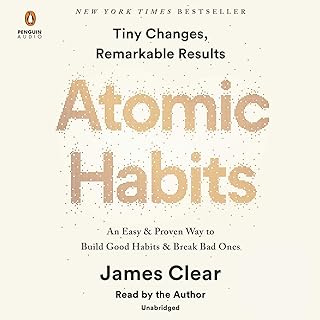
Table of Contents
Why Your Willpower Keeps Letting You Down (and What to Do Instead)
You’ve probably heard that self-discipline is like a muscle. Use it too much and it gets tired. That’s actually true — researchers call it ego depletion. Your ability to resist temptation declines throughout the day.
But here’s the problem: most people try to improve self discipline by simply trying harder. They think if they just grit their teeth, they’ll succeed. But science shows that the most disciplined people aren’t stronger than you. They’re smarter.
They stop relying on willpower entirely. Instead, they set up triggers that automatically start good behaviors, they find the timing where resistance is lowest, and they focus on tiny wins that build momentum.
That’s the exact framework we’re going to unpack.
How to Improve Self Discipline with Triggers
A trigger is anything that cues a behavior. It could be a time of day, a location, an emotion, or a preceding action. The right trigger makes your habit inevitable.
Why triggers work: Your brain loves patterns. When you repeatedly pair a cue with an action, it forms an automatic association. You no longer have to “decide” to do the thing. You just do it.
Design Your Environment for Success
The strongest triggers are physical. If you want to floss, put the floss next to your toothbrush. If you want to read more, put a book on your pillow. If you want to stop snacking, put the junk food in a high cupboard or don’t buy it at all.
James Clear, author of Atomic Habits, calls this “environment design.” He says you don’t need to be a victim of your environment — you can be its architect.
Action step: Identify one habit you want to improve. Then change one physical trigger in your environment today. Put your running shoes by the door. Leave your guitar on the stand. Make the desired behavior the most visible and convenient option.
The Habit Stacking Trigger
Another powerful trigger is an existing habit. This is called habit stacking. After you do a reliable habit (like brushing your teeth), you immediately follow it with your new habit.
Examples:
- After I pour my morning coffee, I will meditate for one minute.
- After I park my car at work, I will review my daily tasks.
- After I take off my work shoes, I will do five pushups.
Habit stacking works because it leverages a trigger that’s already automatic. You’re not creating a new cue from scratch.
Timing: The Secret Weapon to Improve Self Discipline
Most people try to do hard things at the wrong time of day. Then they blame themselves for lacking discipline. But the truth is simpler: your energy and willpower fluctuate throughout the day.
Find Your Peak Energy Window
Your ability to focus and resist temptation is highest in the morning for most people. That’s because you’ve just slept, your glucose levels are stable, and your prefrontal cortex (the decision-making part of the brain) is fresh.
If you want to improve self discipline, schedule your most important tasks during this window. Do your deep work, exercise, or important conversations before noon.
What about night owls? If you genuinely function better at night, that’s your peak. The key is to discover your personal chronotype and align your habits accordingly. Don’t fight your biology — work with it.
Use Implementation Intentions
An implementation intention is a specific plan for when and where you will act. Instead of saying “I’ll exercise more,” say “I will run for 20 minutes at 6:30 AM in my living room.”
Research from psychologist Peter Gollwitzer shows that people who form implementation intentions are two to three times more likely to follow through. Why? Because the timing removes the decision. You’ve already decided. Now it’s just execution.
The 2-Day Rule
Life happens. You’ll miss a day. But the key is to never miss two days in a row. This timing-based rule prevents a small slip from becoming a full collapse.
Whether it’s writing, meditating, or studying, allow yourself one day off. But on day two, you must do at least the minimum. This keeps the habit chain alive without perfectionism paralyzing you.
Tiny Wins: The Physics of Self-Discipline
You want to improve self discipline, but you’ve tried big changes before and they felt overwhelming. That’s because your brain perceives large goals as threats. It activates a stress response that leads to procrastination.
The solution is tiny wins. Small, almost laughably easy actions that build confidence and momentum.
The Two-Minute Rule
James Clear’s Two-Minute Rule states: when you start a new habit, it should take less than two minutes to do.
- “Read before bed” becomes “Read one page.”
- “Do a full workout” becomes “Put on your workout clothes.”
- “Write 500 words” becomes “Write one sentence.”
This might seem too easy to matter, but it works because:
- It overcomes procrastination (starting is the hardest part)
- It creates a psychological win that motivates you to continue
- It reinforces the identity of being a disciplined person
Over time, the tiny win naturally expands. One page becomes a chapter. One sentence becomes a paragraph. But you don’t need to force the expansion — it happens organically.
The Kaizen Approach
Kaizen is a Japanese philosophy of continuous improvement through small, incremental steps. Instead of trying to transform your life overnight, you make 1% improvements daily.
Imagine improving self discipline by just 1% each day. After one year, you’ll be 37 times better. That’s the power of compound growth applied to habits.
How to apply it: Pick one habit and reduce it to the smallest possible version. Then do it every day for 30 days. Don’t change anything else. After 30 days, you’ll have a foundation of consistency that you can build upon.
The Complete System: Putting Triggers, Timing, and Tiny Wins Together
Here’s a step-by-step plan you can start today:
-
Choose one habit you want to improve. Be specific. “Exercise more” is too vague. “Do 5 pushups after waking up” is perfect.
-
Set a trigger. Place your phone on the floor with a pushup app. Leave a yoga mat visible. Use habit stacking: after I brush my teeth, I do my pushups.
-
Set the timing. Do it at the same time every day, preferably during your peak energy window. Use an implementation intention: “At 7:00 AM in my bedroom, I will do five pushups.”
-
Start tiny. If five pushups feels too hard, do one. If one feels too hard, just get into position. The goal is to show up.
-
Track your wins. Each day you complete the action, mark it on a calendar. This visual streak becomes motivating in itself.
-
Never miss twice. If you miss a day, that’s allowed. But make sure you do it the very next day.
Recommended Resources to Improve Self Discipline
To deepen your understanding and stay motivated, these books offer powerful insights and practical strategies. Below is a comparison of some top-rated resources.


Comparison Table: Best Books on Self-Discipline
| Product | Price | Rating | Key Focus | Buy at Amazon |
|---|---|---|---|---|
| Atomic Habits: An Easy & Proven Way to Build Good Habits & Break Bad Ones |
$0.00 (audiobook) | 4.8 | Habit systems, environment design, identity change | Buy on Amazon |
| No Excuses!: The Power of Self-Discipline |
$8.66 | 4.7 | Practical strategies, mindset, taking full responsibility | Buy on Amazon |
| The Power of Discipline: How to Use Self Control and Mental Toughness to Achieve Your Goals |
$16.83 | 4.6 | Mental toughness, self-control exercises, goal achievement | Buy on Amazon |
| Discipline Is Destiny: The Power of Self-Control (The Stoic Virtues Series) |
$5.88 | 4.7 | Stoic philosophy, self-mastery, resilience | Buy on Amazon |
Each of these books offers a unique angle. Atomic Habits is the gold standard for habit formation. No Excuses! by Brian Tracy is a direct, no-nonsense guide that pushes you to take full ownership. If you prefer a Stoic approach, Discipline Is Destiny by Ryan Holiday is both inspiring and practical.
For those who want a science-backed deep dive, The Power of Discipline provides actionable exercises to build mental toughness. And if you struggle with self-sabotage, The Mountain Is You (not in table but highly recommended) will help you understand and dismantle internal barriers.
Another excellent resource is The Science of Self-Discipline (audiobook), which combines neuroscience with practical tactics. It’s free with an Audible trial and has a 4.5-star rating.
If you’re looking for daily motivation, 365 Days With Self-Discipline offers a year’s worth of thoughts and challenges. And for a modern take on digital distractions, check out Digital Self-Discipline — a 4.8-star book that helps you reclaim focus from dopamine traps.
How to Improve Self Discipline When You Feel Like Giving Up
Even with triggers, timing, and tiny wins, there will be days when you want to quit. Here’s what to do:
Revisit your “why.” Remind yourself why you started. Write it down and read it aloud. Emotion fuels action.
Lower the bar. Don’t worry about the quality of the action. Just do the smallest possible version. One pushup. One sentence. One minute of meditation.
Change your trigger. If your current trigger isn’t working, find a new one. Sometimes a fresh environment cue is all you need.
Focus on identity. Instead of “I want to exercise,” say “I am an exerciser.” Identity-based habits stick longer because they align with who you believe you are.
Get accountability. Tell a friend your plan. Use a habit app. Join a community. Knowing someone else expects you to follow through can double your consistency.
Frequently Asked Questions About Self-Discipline
How long does it take to improve self discipline?
There’s no fixed timeline, but research suggests that small changes can become automatic in 18 to 254 days, with an average of 66 days. The key is consistency, not speed. If you focus on triggers, timing, and tiny wins, you’ll see noticeable improvement in 2–4 weeks.
Is willpower a finite resource?
Yes, studies show willpower depletes with use. That’s why relying on triggers and environment design is more effective than sheer willpower. By reducing decision fatigue, you preserve mental energy for what matters.
What’s the biggest mistake people make when trying to improve self discipline?
Trying to change too many things at once. The most disciplined people focus on one habit until it’s automatic. Trying to overhaul your entire life in a week leads to burnout and failure.
Can I improve self discipline without reading books?
Absolutely. The principles in this article are actionable without any additional reading. However, books like Atomic Habits and No Excuses! provide deeper frameworks and ongoing motivation that can accelerate your progress.
How do I handle weekends and holidays?
Maintain your minimum habit. Even if you do only the smallest version (one pushup, two minutes of focus), you’ll keep the habit alive. It’s much harder to restart from zero than to continue from a tiny action.
What if I keep failing despite using these strategies?
Failure is feedback. Re-examine your trigger — is it consistent? Is your timing aligned with your energy? Are your tiny wins truly tiny? Sometimes dropping the bar even lower is the answer. The discipline comes from showing up, not from the magnitude of the action.
Final Word: Your Discipline Journey Starts Now
You don’t need to be a superhuman with steel willpower. You just need to understand how your brain works and then set yourself up for success. Triggers, timing, and tiny wins are your three best friends on this journey.
Pick one habit today. Set a clear trigger. Do it at the right time. Start laughably small. And never miss twice.
That’s how you improve self discipline — not by fighting yourself, but by designing a life where good habits happen automatically. You’ve got this.
If you want a deeper dive, grab a copy of Atomic Habits or No Excuses!. They’ll give you the blueprint and the motivation to keep going.
Now close this article and take your first tiny win. You’ll thank yourself later.