
When children experience big emotions, they often lack the words to explain what’s happening inside. Play and narrative offer powerful, non-threatening ways to process those feelings — especially for kids shaped by trauma. Instead of forcing a conversation, you invite healing through the languages children naturally speak: storytelling, imagination, and movement.
In trauma-informed parenting, play and narrative aren't just distractions. They are structured tools that build emotional regulation, safety, and connection. This article explores how you can use these approaches at home, supported by resources like The Whole-Brain Child and Parenting: 14 Gospel Principles That Can Radically Change Your Family.
Table of Contents
Why Play and Narrative Matter for Trauma Recovery
Children who have experienced stress or trauma often have a heightened threat response. Their brains may struggle to process emotions through logic alone. Play activates the right brain — the seat of emotion, creativity, and implicit memory — while narrative helps organize those experiences into a coherent story.
Together, play and narrative allow a child to rehearse coping skills, express unconscious feelings, and rebuild a sense of agency. This is why experts in trauma-informed parenting emphasize these methods as foundational. For a deeper overview, see Trauma-informed Parenting 101: Safety, Choice, and Connection.
The Role of Play in Emotional Processing
Play gives children a safe container to act out feelings they cannot yet verbalize. A child who has felt powerless may reenact control through building towers or commanding action figures. A child who feels scared might work out the fear through pretend rescue scenarios.
Key benefits of therapeutic play:
- Lowers stress hormones like cortisol
- Builds problem-solving skills in a low-stakes environment
- Strengthens the parent-child attachment bond
- Allows the child to “show” instead of “tell”
Types of Play to Encourage
| Type | Example | Trauma-informed Benefit |
|---|---|---|
| Directive play | Parent suggests a scene or theme | Helps focus on a specific feeling |
| Non-directive play | Child leads, parent observes | Builds trust and autonomy |
| Sensory play | Sand, water, clay, or paint | Regulates the nervous system |
| Role-play | Acting out familiar routines | Restores sense of predictability |
For a step-by-step guide on preventing emotional escalations, read How to Spot Triggers and Prevent Escalations before They Start?.
One excellent resource that translates neuroscience into playful strategies is The Whole-Brain Child. It offers 12 actionable strategies, including “Name It to Tame It” and “Connect and Redirect,” which directly support play-based emotional processing.
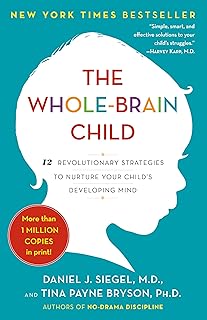
With a 4.7 rating and a price of $10.39, this book is a top pick for parents wanting science-backed play ideas without overwhelming jargon.
Narrative as a Tool for Meaning-Making
While play works on the right brain, narrative helps the left brain make sense of what happened. When a child weaves their feelings into a story — either their own or a metaphor — they begin to integrate the experience. This reduces fragmentation and helps the child feel whole.
Practical ways to use narrative:
- Co-create a “feelings story” – After a meltdown, ask “What would our story be? What happened to the little bear who got so angry?”
- Use books as mirrors – Read stories about characters facing similar emotions, then discuss.
- Write or dictate a new ending – Let the child choose how the story resolves, offering a sense of mastery.
- Draw the story – For pre-literate children, drawing the narrative is just as powerful.
Narrative work is especially helpful for teaching emotional regulation skills. Learn more in Teaching Emotional Regulation Skills to Children Who Feel Threatened.
Combining Play and Narrative: Practical Strategies
The magic happens when play and narrative blend. Here are three integrated activities you can start today.
1. The “Feelings Puppet Show”
Gather two or three puppets or stuffed animals. One puppet feels something intense — fear, anger, sadness. The child (and you) help the puppet talk through it using a simple script: “What happened? How did you feel? What helped you calm down?” This separates the feeling from the child, making it safer to explore.
Why it works: The child projects their own emotions onto a character, then narrates a solution.
2. Play-Based Check-Ins
Before bedtime or after school, set a timer for 10 minutes of “feelings play.” The child chooses an activity (building blocks, drawing, pretend play). While playing, gently narrate what you see: “I notice your dinosaur looks sad. Is he worried about something?” This invites narrative into the play without interrogation.
3. Story Stones for Emotional Vocabulary
Paint or draw simple faces on stones (happy, scared, frustrated, calm). Let the child pick a stone that matches their current feeling. Together, tell a one-minute story about a character who felt that way and what helped.
For more on responding without shame, see Responding to Challenging Behavior Without Shame or Power Struggles.
Why Structure and Compassion Go Hand-in-Hand
While play and narrative are creative, they still need boundaries to feel safe. Trauma-affected children benefit from predictable routines that include dedicated time for emotional expression. You can use a Feelings Journal or a Calm-Down Tent with storybooks. Consistency builds trust.
Another valuable guide is Parenting: 14 Gospel Principles That Can Radically Change Your Family. Though grounded in faith, its principles on grace, connection, and discipline align well with trauma-informed approaches. It offers study questions to help parents reflect on their own responses.

With a 4.8 rating and priced at $16.69, this book is especially helpful for parents seeking a framework that combines compassion with structure.
Final Thoughts: Small Moments, Big Impact
You don’t need a therapy degree to help your child process feelings through play and narrative. A five-minute story after a tough moment, a playful check-in during bath time, or a calm puppet show after a meltdown — each small step builds emotional intelligence and resilience.
Remember, trauma-informed parenting is not about perfection. It’s about being present, responsive, and willing to enter your child’s world on their terms.
Explore more tools in De-escalation Scripts for Parents When a Child Goes into Survival Mode and Setting Boundaries with Compassion: Structure That Doesn’t Re-traumatize.
Frequently Asked Questions
How do I start using play for emotional processing if my child resists?
Begin with non-directive play. Let the child choose the activity. Your role is to observe without directing. Over time, introduce gentle narration. If they resist, back off — force can re-trigger trauma.
Can narrative therapy work for very young children (under 3)?
Yes. Use simple picture books and repetitive phrases. Narrate everyday events in story form — “First we put on shoes. Then we stepped outside. The sun felt warm.” This builds narrative sense and safety.
What if I feel unqualified to guide these activities?
You are the expert on your child. Trust that your presence is the most healing tool. Both The Whole-Brain Child and Parenting: 14 Gospel Principles include practical, parent-friendly exercises. Start small.
How do I know if play and narrative are working?
Look for signs: increased verbal expression, fewer intense outbursts, willingness to talk about feelings, or spontaneous storytelling. Progress is often gradual — celebrate small wins.