
Every single day, you wake up and repeat dozens of actions without thinking. That’s the power of habits – automatic behaviors that shape your health, productivity, and happiness. The difference between where you are and where you want to be often comes down to the small routines you’ve built.
But building good habits isn’t easy. Neither is breaking old ones. The good news? Science has uncovered exactly how habits work – and once you understand that mechanism, you can rewire any part of your life.
Whether you want to drink more water, exercise daily, or use a high-quality protein powder like Optimum Nutrition Gold Standard 100% Whey as a consistent part of your nutrition routine, the same principles apply. This deep dive will show you exactly how to build lasting good habits and finally break free from the bad ones.
Table of Contents
Understanding Habit Loops
At its core, every habit follows a three-step loop: cue, routine, reward. This framework, popularized by Charles Duhigg, is the foundation of behavior change.
- Cue – The trigger that starts the habit. It could be a time of day, an emotion, a location, or even another action.
- Routine – The actual behavior you perform (good or bad).
- Reward – The positive feeling or outcome you get, which reinforces the loop.
For example, you might feel stressed (cue), grab a sugary snack (routine), and experience a temporary energy spike (reward). The brain learns that this path delivers pleasure, so it repeats the loop automatically.
To change a habit, you don’t eliminate the loop – you modify one element inside it. You keep the same cue and reward but replace the routine with something better.
The Science Behind Habit Formation: a Complete Overview
Habits are stored in the basal ganglia, a part of your brain that doesn’t rely on willpower. That’s why you can drive to work on autopilot while thinking about something else. For a deeper look at the neural mechanisms, read The Science Behind Habit Formation: a Complete Overview.
Key takeaways from the research:
- It takes anywhere from 18 to 254 days to form a new habit (66 days on average).
- Repetition, not duration, builds automaticity.
- Small wins create momentum that rewires your brain for bigger changes.
You don’t need superhuman discipline. You just need to understand how your brain learns patterns – and then use that knowledge to your advantage.
Why Breaking Bad Habits Is Hard
Bad habits feel almost impossible to break because they’ve been reinforced hundreds or thousands of times. The reward pathway is deeply ingrained. Moreover, your brain tends to default to the path of least resistance.
Common reasons bad habits stick:
- Immediate gratification – The reward comes now; the consequence comes later.
- Trigger-rich environments – Your phone notifications, pantry snacks, or couch all act as cues.
- Stress and emotional states – Bad habits often become coping mechanisms.
- Lack of awareness – You do them without thinking.
The solution is not to fight the habit with sheer willpower. Instead, you must redesign the environment and the cue-reward relationship.
5 Proven Strategies to Build Good Habits
These strategies are backed by behavioral science and have been used by top performers worldwide. For more examples from highly successful individuals, check out The Most Effective Habits of Successful People.
Start Small
The biggest mistake is trying to change everything at once. Your brain resists big changes because they feel threatening. Instead, choose a habit so small it feels ridiculous.
- Want to exercise? Start with one push-up per day.
- Want to read more? Read one page each night.
- Want to drink protein shakes daily? Start by mixing one scoop with water every morning.
When the habit is tiny, there’s no excuse not to do it. Once you’ve built the routine, you can increase the volume.
Stack Your Habits
Habit stacking links a new behavior to an existing one. This uses the current habit as a cue.
“After I brush my teeth, I will meditate for one minute.”
“After I make my morning coffee, I will prepare my protein shake with a scoop of Orgain Organic Vegan Protein Powder.”
This technique works because the existing routine is already automatic – it primes your brain to follow through.
Design Your Environment
Your surroundings dictate your behavior more than your motivation does. Make good habits easy and bad habits hard.
- Place your gym bag next to the door.
- Keep a blender bottle and protein powder on the kitchen counter, not in the back of the cabinet.
- Remove junk food from your house.
- Put your phone in another room while you work.
If you want to build a habit of drinking water, keep a filled bottle on your desk. Environment design is your strongest lever.
Use Rewards Wisely
The brain craves immediate rewards. Even small pleasures can reinforce a habit.
- After a workout, enjoy a delicious Optimum Nutrition Gold Standard 100% Whey Protein Powder, Double Rich Chocolate shake.
- After finishing a task, listen to your favorite song.
- After a week of sticking to your habit, treat yourself to a massage or a new book.
Important: The reward must be directly tied to the behavior and felt quickly. Over time, the internal feeling of accomplishment becomes reward enough.
Track Your Progress
What gets measured gets managed. Use a simple checklist, a habit tracker app, or a calendar where you mark an “X” each day you complete the habit.
- Visual progress creates satisfaction.
- Missing one day doesn’t break the streak – just don’t miss two.
- Review your wins weekly to reinforce motivation.
How to Break Bad Habits Effectively
Breaking a habit is not about stopping it cold turkey. It’s about disrupting the loop and replacing it with a healthier alternative.
Identify Triggers
Ask yourself: What cue starts the bad habit? When and where do you do it? How do you feel right before?
- Do you scroll social media when bored?
- Do you smoke when stressed?
- Do you eat sugar when you’re tired?
Write down the cue-routine-reward for each bad habit. Awareness alone gives you power over it.
Replace, Don’t Erase
Trying to simply stop a habit leaves a void. Your brain will crave the reward and eventually relapse. Instead, insert a new routine that provides a similar reward.
- If you eat junk food for a dopamine hit, replace it with a brisk walk or a piece of fruit.
- If you bite your nails when anxious, squeeze a stress ball.
- If you reach for soda when thirsty, grab a glass of water or a Premier Protein Powder, Chocolate Milkshake for a healthy, satisfying alternative.
The cue and reward stay the same – only the routine changes.
Create Friction
Make the bad habit harder to do. Every extra second of effort reduces the likelihood of doing it.
- Keep snacks in the basement or top shelf.
- Uninstall apps with endless feeds.
- Leave your credit card at home when going out.
- Use a commitment app that locks you out of distracting websites.
If it takes 30 seconds to get to a protein bar but 5 minutes to buy a donut, you’ll choose the bar.
Use Commitment Devices
A commitment device is a present action that locks in future behavior. Examples:
- Sign up for a gym class with a cancellation fee.
- Tell a friend you’ll text them your workout photo.
- Pre-pay for a month of healthy meal delivery.
Accountability raises the stakes. Knowing there’s a consequence for failing makes you more likely to follow through.
Protein Powder: A Case Study in Habit Building
Let’s take a common health goal – getting enough protein daily. Many people struggle to meet their protein needs. A protein powder habit can solve this, but it requires consistency.
Here’s how you can apply the habit loop:
- Cue – Time of day (post-workout or morning).
- Routine – Mix one scoop of protein powder with water or milk.
- Reward – The delicious taste and the feeling of recovery.
To make it sticky:
- Start small: Mix just half a scoop.
- Stack it: “After I finish my workout, I will prepare my shake.”
- Design environment: Keep the tub and a shaker bottle visible on the counter.
- Track: Mark an X on your calendar every time you drink it.
Using a high-quality protein powder like Optimum Nutrition Gold Standard 100% Whey Protein Powder, Vanilla Ice Cream, 5 Pound removes the barriers of taste and mixability – making the routine more pleasant and therefore more repeatable.
Over time, the habit becomes automatic. You no longer think about it; you just do it. That’s the power of proper habit formation.
Best Protein Powders to Support Your Habit
The following products are highly rated on Amazon and can help you build a nutritious, consistent protein habit. Click on any image to learn more.

Optimum Nutrition Gold Standard 100% Whey – Double Rich Chocolate – $44.99 – ⭐ 4.6

Optimum Nutrition Gold Standard 100% Whey – Vanilla Ice Cream 5lb – $79.99 – ⭐ 4.7
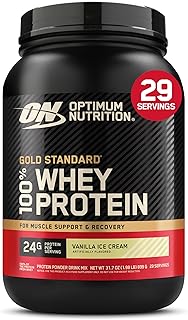
Optimum Nutrition Gold Standard 100% Whey – Vanilla Ice Cream 2lb – $44.99 – ⭐ 4.7

Premier Protein Powder – Chocolate Milkshake – $25.97 – ⭐ 4.6

Orgain Organic Vegan Protein – Vanilla Bean – $31.52 – ⭐ 4.5

Dymatize ISO 100 – Vanilla 5lb – $108.99 – ⭐ 4.7

Premier Protein Powder – Vanilla Milkshake – $31.60 – ⭐ 4.6

Transparent Labs Whey Isolate – French Vanilla – $59.99 – ⭐ 4.5
For a complete overview of popular protein powders, here are additional options:
| Product | Size | Price | Rating |
|---|---|---|---|
| Body Fortress Super Advanced Whey, Vanilla | 3.9 lbs | $45.28 | ⭐ 4.6 |
| Six Star Whey Protein Plus, Triple Chocolate | 1.82 lbs | $24.97 | ⭐ 4.5 |
| Isopure Zero Carb Whey Isolate, Unflavored | 3 lbs | $89.95 | ⭐ 4.4 |
| Dymatize Elite 100% Whey, Rich Chocolate | 5 lbs | $76.18 | ⭐ 4.6 |
| Orgain Organic Protein + 50 Superfoods, Vanilla Bean | 2.02 lb | $34.15 | ⭐ 4.6 |
| Dymatize x Fruity Pebbles ISO100 | 20 servings | $42.48 | ⭐ 4.6 |
| Dymatize Super Mass Gainer, Gourmet Vanilla | 8 servings | $39.98 | ⭐ 4.5 |
| Levels Grass Fed Whey, Pure Chocolate | 2 lb | $44.99 | ⭐ 4.5 |
| Vital Proteins Collagen Peptides, Unflavored | 9.33 oz | $18.65 | ⭐ 4.6 |
| NAKED Whey Vanilla Protein | 24 servings | $44.99 | ⭐ 4.1 |
| Nutricost Whey Protein Concentrate, Chocolate | 5 lbs | $74.95 | ⭐ 4.5 |
| Orgain Organic Unflavored Vegan Protein | 1.59 lb | $26.99 | ⭐ 4.3 |
FAQ: Building Good Habits and Breaking Bad Ones
How long does it take to form a new habit?
Research from University College London shows it takes an average of 66 days for a new behavior to become automatic. However, the range is 18 to 254 days, depending on the complexity of the habit and the person. Start small and be patient – consistency matters more than speed.
Why do bad habits feel so hard to break?
Bad habits are reinforced by immediate rewards (dopamine) and have been practiced many times, creating strong neural pathways. Additionally, they are often triggered by environmental cues or emotional states. Breaking them requires disrupting the cue-routine-reward loop, not just willpower.
Can I use protein powder to help build a healthy habit?
Absolutely. Protein powder can serve as a consistent, convenient way to meet your nutrition goals. By stacking it with an existing habit (like a workout or breakfast), you create a reliable routine. Choose a product you enjoy – taste and mixability boost habit adherence.
Is it better to focus on one habit at a time?
Yes. Trying to change multiple habits simultaneously overwhelms your willpower and reduces success rates. Focus on one keystone habit – like drinking a protein shake daily – and let the momentum spread to other areas (like better food choices and more energy).
What should I do if I miss a day?
Missing one day does not ruin your habit. The key is to never miss two days in a row. Use the “don’t break the chain” method: mark a calendar every time you complete the habit. A single gap is just a blip; two gaps start to undo your progress.