
You know that feeling. You set a goal on Monday, feel unstoppable, and by Wednesday the couch is winning. The question “how to improve my self discipline” isn’t just about willpower. It’s about building a system that makes the right choices automatic.
The short answer? Self-discipline is a skill you can train. It’s not a magical trait you’re born with. The seven habits below are backed by neuroscience and real-world success stories. They’ll help you stop quitting and start following through—even when motivation runs dry.
As Brian Tracy writes in his bestselling book No Excuses!: The Power of Self-Discipline, “Self-discipline is the key to personal greatness.” Let’s unpack exactly how to build yours.
Table of Contents
What Is Self-Discipline and Why Does It Matter?
Self-discipline is the ability to do what you should do, even when you don’t feel like doing it. It’s the bridge between intention and action. Without it, goals stay dreams. With it, you gain freedom—freedom from bad habits, procrastination, and the guilt of missed opportunities.
Research shows that self-discipline predicts success better than IQ does. The good news: you can improve it one small habit at a time. Here’s how.
Habit 1: Start Your Day with a Win
The first hour of your morning sets the tone for everything that follows. When you complete a small task right after waking, you prove to yourself that you can follow through. Momentum builds.
Admiral William H. McRaven, author of Make Your Bed: Little Things That Can Change Your Life…And Maybe the World, explains that making your bed gives you a simple sense of pride. It’s a micro-victory that triggers a chain reaction of productive decisions.

Try this: Choose one tiny morning ritual. Make your bed, drink a glass of water, or do ten pushups. Keep it under two minutes. Do it every day for two weeks. You’ll be amazed how that small win shifts your self-image.
Habit 2: Use the Two-Minute Rule to Stop Procrastinating
The hardest part of any task is starting. The two-minute rule, popularized by James Clear in Atomic Habits: An Easy & Proven Way to Build Good Habits & Break Bad Ones, states: if a task takes less than two minutes, do it immediately.

This habit trains your brain to stop overthinking. Want to write a chapter? Write one sentence. Want to start exercising? Put on your sneakers. That’s it. Once you start, the inertia of action carries you forward.
Most people underestimate how many tasks can be completed in a single focused minute. Over time, these micro-actions compound into massive progress.
Habit 3: Build a “No” Muscle
Self-discipline often means saying no to the wrong things so you can say yes to what matters. Every “yes” to a distraction is a “no” to your goal.
In Yes to You, No to Them: The Discipline of Saying No and the Freedom that Follows, the author argues that boundaries are the foundation of self-control. When you stop allowing other people’s demands to derail your focus, you reclaim your time.

Challenge yourself: For one week, say no to any non-essential request. No extra meetings. No random favors. Protect your prime hours. You’ll feel the power of your own priorities.
Habit 4: Eliminate Digital Distractions on Purpose
Your phone is a slot machine in your pocket. Every notification is a temptation that drains your discipline. The average person checks their device 96 times a day.
Digital Self-Discipline: Break Free from Dopamine’s Snare, Overcome Digital Addictions & Reclaim Your Drive offers a roadmap to take back control. It’s not about quitting tech—it’s about intentional use.

Action step: Turn off all notifications except calls and messages from key people. Keep your phone in another room during deep work. Use app blockers if needed. You’re not being rude; you’re protecting your focus.
Habit 5: Harness the Power of the “5-Minute Reset”
When you feel your willpower slipping, reset with a short, structured exercise. The Power of Self-Discipline: 5-Minute Exercises to Build Self-Control, Good Habits, and Keep Going When You Want to Give Up provides exactly that—bite-sized workouts for your willpower muscle.
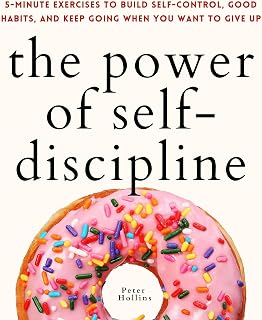
These exercises include five-minute breathing, visualization, or even just standing up and stretching. They’re designed to interrupt the autopilot of bad habits.
When you feel the urge to binge-watch or snack aimlessly, do one of these resets instead. You’ll re-engage your prefrontal cortex and make a conscious choice.
Habit 6: Adopt a Stoic Mindset
Stoicism isn’t about suppressing emotions; it’s about focusing only on what you can control. This philosophy is a powerhouse for self-discipline.
Ryan Holiday’s Discipline Is Destiny: The Power of Self-Control and the practical guide Stoic Self-Discipline: Stoicism’s 33 Ancient Secrets to Building Unbreakable Self-Control and Mental Toughness both dive deep into these principles.

The core idea: you can’t control the weather, but you can control your reaction. You can’t control other people, but you can control your effort. Focus there.
Daily practice: Every morning, ask yourself, “What’s one thing I can control today?” Then do that thing with full presence. Over time, this shifts your locus of control inward.
Habit 7: Track Everything and Review Weekly
What gets measured gets managed. If you don’t track your discipline, you’re flying blind. Use a simple journal, a habit tracker, or an app.
The book 365 Days With Self-Discipline: 365 Life-Altering Thoughts on Self-Control, Mental Resilience, and Success offers daily prompts to keep you accountable. Similarly, The Mountain Is You: Transforming Self-Sabotage into Self-Mastery helps you recognize patterns of self-sabotage and replace them with self-mastery.

Plan: Every Sunday evening, review what went well and where you slipped. Don’t judge—adjust. Ask: “What one habit will I focus on next week?” This reflection turns failure into feedback and keeps you moving forward.
Top Books to Supercharge Your Self-Discipline Journey
The following resources will give you different angles on the same challenge. Each one is a practical tool, not just inspiration.
| Product | Rating | Price | Buy on Amazon |
|---|---|---|---|
 |
4.7 | $8.66 | Buy Now |
|
4.8 | $0.00 (audible) | Buy Now |
|
4.7 | $6.95 | Buy Now |
 |
4.6 | $16.83 | Buy Now |
|
4.8 | $12.99 | Buy Now |
|
4.7 | $5.88 | Buy Now |
If you’re serious about how to improve my self discipline, pick up at least one of these books. Start with whichever habit you struggle with most.
The Psychology Behind Self-Discipline
Why do we know what to do but fail to do it? It’s the gap between the emotional brain and the rational brain. Temptation wins because it offers immediate rewards. Discipline requires delayed gratification.
The book The Psychology of Self-Discipline: Twenty-Four Proven Strategies to Rewire Your Brain for Consistent Action breaks down exactly how to train your neural pathways. Each strategy is backed by cognitive science.

One key insight: you only have so much willpower per day. Use it on your most important decisions first. Automate everything else—clothes, meals, routines. Save your discipline for the things that truly matter.
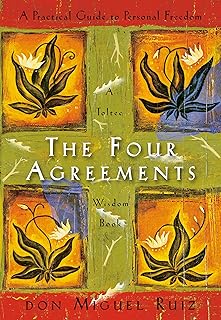
Another powerful concept comes from The Four Agreements: A Practical Guide to Personal Freedom. Agreement number one: “Be impeccable with your word.” When you make a promise to yourself, keep it. That builds self-trust, and self-trust is the bedrock of self-discipline.
How to Stay Consistent When Life Gets Messy
The seven habits work perfectly… until they don’t. Life throws curveballs. You get sick, work gets crazy, or you just feel exhausted. That’s when discipline really gets tested.
Here’s the secret: never miss twice. One slip is okay. Two in a row becomes a pattern. So if you miss a day of your habit, get back on track the next day immediately. No guilt, no shame—just a clean restart.
Books like The Power of Self-Discipline: 5-Minute Exercises and Self Discipline: 30 Days to Self Discipline offer structured programs for precisely this scenario. They give you a blueprint to follow when your own motivation is gone.

Remember: discipline is not about perfection. It’s about returning to the path, again and again, until the path becomes the only way.
Frequently Asked Questions
Can self-discipline be learned or is it innate?
It can absolutely be learned. Your brain is plastic—it rewires itself based on repeated behaviors. Each time you resist temptation, you strengthen the neural circuits for self-control. Start small and build.
How long does it take to build a discipline habit?
Research suggests an average of 66 days for a new habit to become automatic. But even two weeks of consistent practice will show noticeable improvement. Focus on the process, not the timeline.
What if I fail after a few days?
Failure is part of the learning curve. The key is to analyze what went wrong: was the trigger too strong? Was the goal too big? Adjust and try again. One missed day is a data point, not a verdict.
Are there shortcuts to self-discipline?
No real shortcuts, but there are leverage points. Removing temptations (e.g., not buying junk food) works better than white-knuckling. Accountability partners double your success rate. And getting enough sleep is a non-negotiable foundation.
Which book is best for a beginner?
No Excuses! is a great starting point because it’s motivational and practical. Atomic Habits is the most systematic approach. Pick one and commit to reading 10 pages a day.
How do I stay disciplined when no one is watching?
That’s the ultimate test. Use a habit tracker, publicly share your goals, or join a like-minded community. The Mountain Is You directly addresses the internal saboteur. Also, remember that you are the one watching. Your self-respect is on the line.
Can self-discipline help with weight loss, finances, and relationships?
Yes, it’s the common denominator. Eating right, saving money, and communicating well all require delayed gratification and consistent action. Master discipline in one area, and it spills over into others.
Your Next Step: Choose One Habit and Own It
You now have a complete toolkit for how to improve my self discipline. But knowledge without action is powerless. Pick the habit that resonates most with you right now. Do it for one week.
Maybe it’s the two-minute rule. Maybe it’s making your bed. Maybe it’s saying no to one distraction.
Whatever you choose, commit to it. Write it down. Set a reminder. Tell a friend.
Then, after that week, add a second habit. Layer them slowly. You are building a fortress of self-discipline, one brick at a time.
Remember: every small win rewires your mind for bigger wins. The person you want to become is already inside you. All you need is the discipline to let them out.
Start now.